

By Muhammad Rafi Bakri and Rifky Pratama Wicaksono
The authors are analysts at the Supreme Audit Agency (BPK). This article reflects the authors’ own analysis and views and does not necessarily represent the official positions of their employers or those of The Reformist.
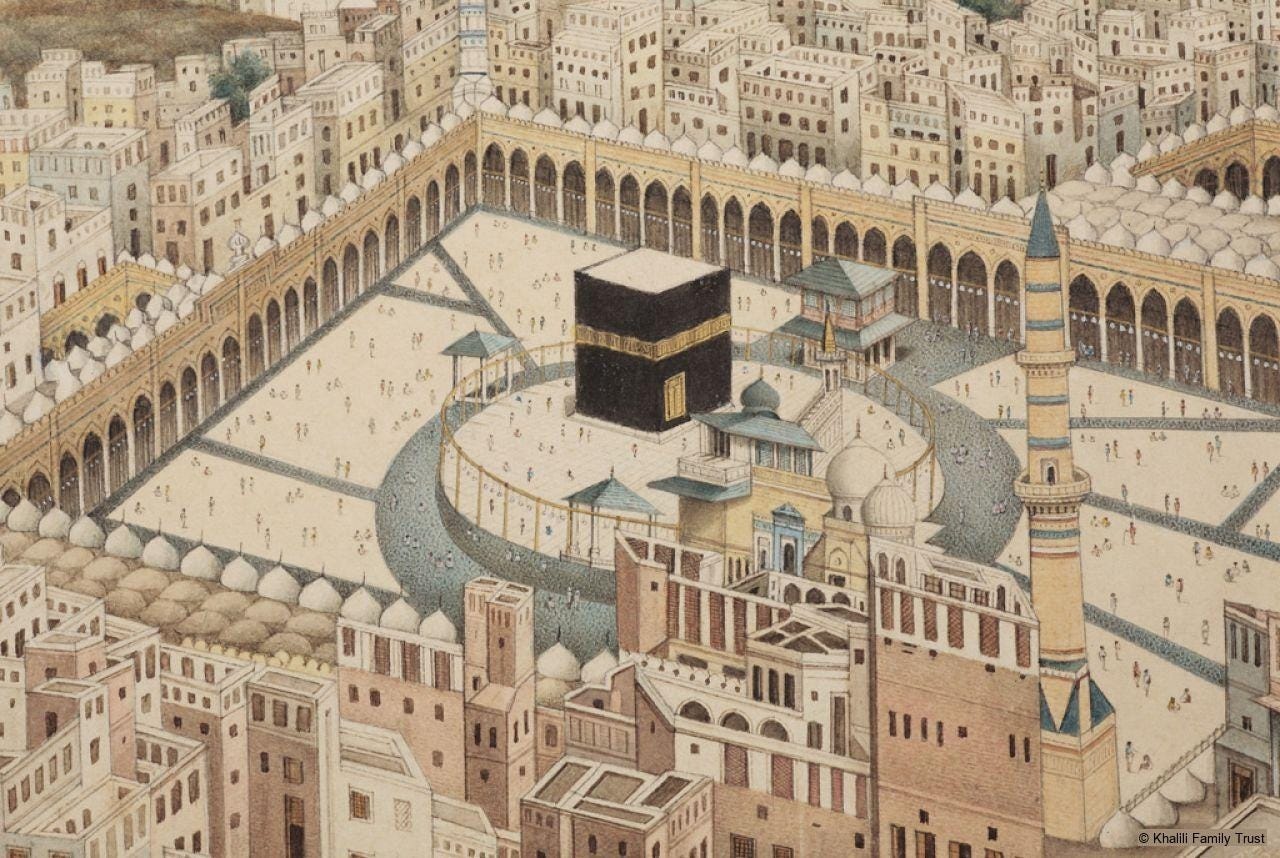
Every year, over 200,000 Indonesian Muslims perform the annual Hajj pilgrimage in Saudi Arabia. With millions of registrants, hundreds of thousands of annual departures, and coordination across domestic agencies and partners in Saudi Arabia, managing the Hajj is one of Indonesia’s most complex public services.
A sharp lens on these complexities can be found in the 2025 Hajj audits conducted by the Supreme Audit Agency (BPK). The report flagged financial inconsistencies and highlighted the need to address segments of Hajj governance that must be accounted for.
Successful Hajj governance should not be measured only by the absence of major issues during the pilgrimage. It requires fair queue management, rigorous data verification, clear cost structures, and readiness of health and operational services before any pilgrim touches down in Saudi Arabia.
A previous Reformist article has noted public expectations for the Hajj around four key principles: transparency, care, reliability, and spirituality. This is where the 2025 BPK audit findings sharpen the discussion, providing valuable insights into principles that must be translated into tangible controls well before pilgrims depart every year.
Satisfaction is commendable, but it does not tell the whole tale
The 2025 Hajj saw several positive results: the Pilgrims Satisfaction Index rose from 88.20 to 88.46, over 99.9 percent of the pilgrim quota was filled, and pilgrims received improved meal services. The government also introduced Istithaah (the Islamic principle that a pilgrim must be physically, mentally, and financially capable of performing Hajj) requirements before final payments are made. These achievements are important and deserve recognition, since organizing departures and services for so many pilgrims in a short time can be very challenging.
But satisfaction indexes alone do not capture the full pilgrimage experience. For example, it does not capture whether the queue was fair, whether procurement was properly controlled, or whether public funds reached the right people. A pilgrim can feel well served in Makkah, while the system that determined their departure contained weaknesses in queue integrity, digital control, and fiscal discipline.
1. The integrity problem behind Indonesia’s Hajj waitlist
One main concern from the audit findings is that planning to fill the regular Hajj quota is incomplete and does not fully comply with Law No. 8/2019 on Hajj and Umrah Pilgrimage Administration. Indonesia’s national Hajj registration and queue management database (SISKOHAT) remains faulty with glaring weaknesses.
For instance, the system lacks sufficient controls to verify data for merging mahram—a male guardian whom Islamic law requires to accompany a woman during Hajj, typically a husband or close blood relative—nor can it transfer quota numbers from ineligible pilgrims to new replacements.
Other weaknesses include missing checks for file completeness, reliance on manual verification, inadequate control over verification steps, the use of shared accounts, and poor separation of duties. These increase the risk of abuse and can delay eligible pilgrims.
Another finding revealed that Rp 161.73 billion in public Hajj funds was spent to cover the pilgrimage costs of 4,760 individuals who did not meet departure requirements. This group includes 504 pilgrims who had performed the pilgrimage within the past ten years, 2,682 with non-familial mahram combinations, and 1,574 with portion transfers that did not comply with regulations.
With long queues, every seat matters. Poor verification burdens potential pilgrims who are sidelined despite meeting all Hajj requirements.
2. More providers, more coordination gaps
In 2025, the Multisyarikah model—a system in which Hajj services are distributed across multiple providers in Saudi Arabia—was used for the first time, allowing services to be shared among several providers. However, this poses significant coordination challenges, especially when a flight group is linked to more than one provider.
BPK finds that visa services for regular pilgrims are still lacking. Preparing pre-manifests and manifests is not fully in sync with how services are divided among companies. As a result, some groups are served by more than one company, and service allocation does not always follow the rules.
These coordination problems are especially clear in Armuzna services, the collective term for the three sacred sites of Arafah, Muzdalifah, and Mina, where key Hajj rituals are performed. Changes to the departure plan were not well planned. This led to delays, insufficient transport fleets from Muzdalifah to Mina, too many pilgrims at the markaz, overcrowded tents, and supplies being sent to the wrong places. These problems show the need for clearer work instructions and better coordination in using the Multisyarikah model.
3. The medical service blind spots of Hajj administration
Health services also need special attention. The BPK report found that some health goods and services have not fully met contract terms or have not been used enough. The Indonesian Hajj Health Clinic in Mecca is underused because its Civil Defense certificate—an official emergency-safety license required by the Saudi Civil Defense before any facility can legally operate—had not yet been issued at the time of the audit.
Medicines and health supplies worth Rp 2.61 billion were also reported to have a shorter shelf life than legally required, meaning that they will be ineffective come next year’s Hajj season.
On top of that, Rp 1.74 billion in polio vaccines have not been used despite Indonesian pilgrims being elderly or having pre-existing health risks. The volume of resources maintained does not align with actual needs in the field, resulting in public funds tied up in vaccine stocks that fail to provide adequate protection.
In this regard, the planning and procurement stages of Hajj health-related goods and services must be tied to verified needs and certification, which are to be completed before the season commences. That way, the government can detect weaknesses and mitigate risks before departure, rather than rediscovering them in the next audit report.
4. Addressing the corruption in the room
Improving Hajj governance also means looking at how costs are structured. BPK found that last year’s pilgrimage included Rp 64.37 billion in costs that were not directly related to pilgrim services. These include management activities, financial manager fees, financial operations, monitoring and evaluation, and support for asset maintenance in Indonesia. Taken together, these concerns paint a sad picture of potential rent-seeking that has no place for a sacred event like the Hajj.
Some governance activities are necessary to organize the pilgrimage, but it is important to separate costs that directly benefit pilgrims from those that are purely administrative or supportive. Without this clear separation, the Rp 87.4 million pilgrimage price point—determined by the government—becomes opaque, raising corruption concerns that have long plagued the Hajj sector.
Reforming the sacred, one institution at a time
Corruption and rent-seeking in Hajj affairs are not novel. A few years ago, corruption investigators alleged irregularities in the allocation of additional Hajj quotas, with state losses calculated at Rp 622 billion during the 2023-2024 season. In 2014, a former minister was convicted of misusing state Hajj funds. The structural lesson is consistent. Allocation rules that can be altered through opaque discretion create an avoidable risk of corruption.
Fixing this requires more than better administration. It requires governance architecture. The most urgent starting point is the institutions that govern the Hajj themselves.
SISKOHAT, for example, should function as an auditable rights engine rather than a passive database with no executive functions. Saudi Arabia’s Nusuk platform offers a useful design reference by integrating registration, verification, payment, and service authorization into a more traceable digital process. Indonesia does not need to replicate Nusuk, but it may benefit from the same design principle.
The Indonesian government should require Hajj authorities to build a parallel set of risk indicators that track system health before pilgrims depart. These indicators should cover visa mismatch rates, manifest revisions, procurement exceptions, unresolved complaints, and the follow-up status of BPK’s recommendations.
Public dashboards need not expose private pilgrim data. But they should make governance performance visible and contestable. A system that publishes its own risk scorecard before each departure season signals that it takes accountability seriously. One that waits for the next audit to surface the same recurring problems does not.
Indonesia already has the institutional experience, digital infrastructure, and audit diagnosis needed to improve Hajj governance. What remains is the discipline to turn them into enforceable controls before the next season begins.
Indonesian pilgrims deserve institutional justice, especially when millions of them have spent decades waiting patiently behind queues that can span over three decades, whilst having to deposit tens of millions of Rupiah, for a once-in-a-lifetime sacred act like the Hajj pilgrimage.
Really interesting to hear what BPK analysts think about Hajj administration outside the necessarily rigid language of audit reports.
My takeaway is that Hajj has become something of a 'monster' to coordinate. Many of its problems come down to whether the government is truly the best actor to manage an extraordinarily complicated chain from maintaining a fair queue, verifying eligibility, controlling costs, procuring services, coordinating multiple providers, and ensuring that all the pilgrims receive safe and reliable services from departure to return.
I personally lean toward a 'no' here... mainly because a big chunk of Hajj management doesn't strike me as something that must be 'monopolized' by the government. Especially considering that there are many countries—with Hajj participants within similar proportion to population as Indonesia—adopting a mixed licensing model that seems to work (e.g. Turkiye, India, and the UK). My gut feeling tells me a fully private model, however, may not be a viable option considering Indonesia's large Hajj delegation every year.
That said, I feel that the underlying failure is not simply technical. There is a history of bad leadership here. We seem to have conflated project management expertise with Islamic rule expertise. If we had to come up with the proper criteria for who should manage Hajj, I think excellent travel project managers should take priority over Islamic rule experts here.
Without its religious components, Hajj is ultimately a travel management task on an enormous scale. It requires religious understanding, certainly, but such expertise can come in many forms and methods. Therefore its executive leadership must instead be ones with expert-level skills in programme delivery, logistics, procurement, risk management, and systems integration. A cleric need not be expected to double as the country’s largest travel operator. Can we find people who excel in both areas simultaneously? Perhaps—but that will certainly be a tall order.
This is where I think the first reform should be an audit not merely of Hajj expenditure or performance, but of its distribution of functions. Which responsibilities must remain with the state, which can be commissioned to external providers, and which should simply be regulated?
The state should unquestionably retain control over quota allocation, queue and eligibility verification, the integrity of the Hajj information system, transparent cost-setting, minimum service and safety standards, protection of Hajj funds, complaints and redress, and strategic coordination with the Saudi authorities—a lot of these are either explicitly mentioned or implied in this article.
But I'm sure many would agree that the government is not even the best option to manage the operational portion of Hajj itself. Qualified providers could deliver standardised, end-to-end service packages under competitive and transparent contracts, provided that accountability remains unmistakably with the state. As I said, this should still be a mixed model—not sheer privatization—but a clearer separation between regulating, commissioning, delivering, and auditing services would be a game changer.
The government should guarantee a universal baseline for every pilgrim, while providing additional hands-on assistance for vulnerable pilgrims (including those requiring a mahram to accompany them). If these takeaways are at least close to correct, then the most pressing question must shift from "how do we reform Hajj as a process" to "how do we divide responsibilities appropriately between state and private operators"—both without compromising on the accountability part.