

The authors are professionals in the history and culture field. Yogi is a historian specializing in archival sources. Fajrin is an independent culture researcher whose work extends beyond the academic context. This article reflects the authors’ own views and analysis and doesn’t necessarily reflect those of The Reformist.
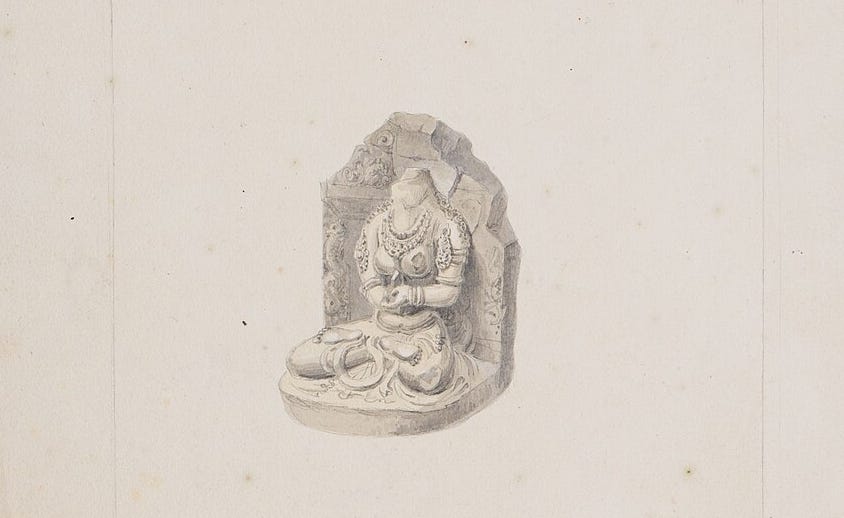
This article first appeared in Kenapa Harus Peduli in Indonesian, written in response to The Reformist’s vol. 28 on cultural heritage and museum management reform.
In recent years, public discourse about cultural heritage has gotten increasingly popular. At first glance, it gives the impression that the state has been paying serious attention to the largely ‘abandoned’ cultural sector. However, such narratives primarily grapple with surface-level debates that overlook a fundamental issue: how is culture actually understood, and for whose interests are these agendas executed?
That is why we found this Reformist article titled “Why is it so difficult for ‘Wonderful Indonesia’ to make culture a priority?” both intriguing and ironic.
First of all, we’d like to concede that the author has commendably mapped valid problems. The Indonesian government has indeed paid little attention to its cultural heritage, as proven by the lack of budgetary support. They also astutely contextualize the repatriation of artifacts within the history of Dutch colonialism in the archipelago.
The problem, however, is the author’s state-centric approach, reducing the cultural crisis to mere managerial issues. Cultural heritage is imagined as an inanimate object that needs to be “managed well” in museums, strictly through administrative reform.
While this perspective is not entirely wrong, it becomes problematic when it fails to recognize that neither cultural heritage nor museums is ever a neutral entity.
We’d like to offer three critical notes. First, The Reformist’s article positions the government as the primary actor in managing cultural heritage, while it might not be. Second, the article’s illusion of decolonization stops at the repatriation of artifacts, without dismantling coloniality. Third, the article tends to center institutional reform as the primary solution without examining its accompanying limits and contradictions.
What is a “cultural heritage” and who decides?
Just as our understanding of inheritance often becomes an object of dispute, cultural heritage is equally an arena of contestation. Something becomes cultural heritage not simply because of its high intrinsic value, but because an authority in power deems it worthy of preservation and institutionalization.
This dynamic is captured by the concept of the Authorized Heritage Discourse (AHD), which describes the professional practices that institutionalize cultural heritage to legitimize an “official interpretation” of the past. The government has a structural advantage that enables it to play a dominant role in defining the nation-state’s identity.
In the context of The Reformist’s article, AHD is highly apparent when the Indonesian government is positioned as the principal actor in determining the direction of cultural preservation. But studies have indicated that this framework poses significant problems for public participation, or the lack thereof.
The current regulation, Law No. 11/2010 on Cultural Heritage, has yet to fully grant latitude to non-governmental actors to independently determine what cultural heritage is important to them and the best ways to preserve it for future generations.
Indigenous peoples and local communities are treated as the Other, whose voices and knowledge are not truly considered a valid epistemic foundation. Furthermore, heritage discourses tend to fixate on material dimensions alone.
Stripped of its living context, cultural heritage is prone to being reduced to something purely technical: a problem that can be resolved simply through governance reform, institutional modernization, and regulatory improvements.
It is unsurprising, then, that the “success” of cultural heritage is measured by how professionally it is managed and by the extent to which it meets global standards that stem directly from Western knowledge paradigms.
Half-hearted decolonization
If we are to truly address the “elephant in the room” when talking about Indonesia’s cultural heritage issues, the next necessary step should be to deconstruct the reality that its management systems and interpretations remain highly centered on the interests of those in power—and the coloniality that has yet to crumble.
Obviously, Indonesia is no longer under Dutch East Indies rule, but many of its cultural heritage institutions operate with a mindset akin to that of the former colonizer. Even the National Museum of Indonesia participates in reproducing the colonial gaze in its representation of Indonesian history.
This coloniality feels increasingly palpable when we observe the celebrations surrounding the repatriation of artifacts to Indonesia.
Repatriation becomes a stage for state political performance; celebrated as a diplomatic victory and a resurgence of national dignity, with state ceremonies and heroic narratives about bringing the nation’s history home.
Cultural heritage, here, manifests as “symbolic capital”. A value of prestige and honor that converts into political legitimacy for the regime.
Such is the very issue that needs to be criticized about the approach taken in The Reformist article. The author moves too swiftly toward institutional optimism without sufficiently challenging the colonial nodes that still shape the understanding and management of cultural heritage in Indonesia today.
We could see it in the way the state fails to resolve various crucial issues within the domestic cultural landscape, from evicting indigenous people from their living spaces and the commercialization and illegal sale of artifacts, to the destruction of cultural heritage and the marginalization of local communities from decision-making processes related to their cultures.
Indigenous communities’ cultural heritage, having been uprooted from its living context by European colonialism during the Dutch occupation, is at risk of undergoing a second uprooting through the centralization of Indonesia’s cultural heritage authority.
Repatriation brings heritage items home—yes. But it merely shifts the center of historical legitimacy from the colonial metropole to the national capital.
Another problem arises when museum reform in Indonesia is directed to follow the standards of Western institutions. The Reformist article views the British Museum model as a crucial step toward more professional museum governance. The issue is that the British Museum itself grew from the accumulation of colonial wealth and to this day remains the most naked symbol of colonialism itself.
Therefore, we must be deeply cautious when adopting such institutional models, as blindly replicating them risks importing the very power dynamics we seek to dismantle.
Reform, or commodification?
During his tenure as the Director-General of Culture in the then-Ministry of Education and Culture, Hilmar Farid proposed improving and utilizing “cultural infrastructure” as a form of “cultural investment”. But the use of cultural infrastructure, including museums, should not limit public participation, technological upgrades, or improvements in internal management.
Enthusiasm for the repatriated artifacts must be followed by practical understanding of their management and use, for the good of the people, education, and science. Even if some repatriated artifacts possess neither sacred value nor functional use in our modern society, access to them as research objects must be guaranteed.
Law no. 66/2015 on Museums specifically mentions the use of museums, among other things, for research, thereby making such research compulsory for museum administrators, individuals, or customary law communities (masyarakat hukum adat) under the authorization of the head of the museum.
But despite being legally mandated, information on the authorization process for conducting research in museums is not yet widely available. Thus, the stereotype of museums as decrepit institutions hinders effective research efforts.
The establishment of the Culture Ministry, however, has led to significant changes in the conception of Indonesia’s cultural policies, focus, and budgets. But even before making Cultural Affairs a standalone ministry, the establishment of the Indonesian Heritage Agency (IHA) as a Public Service Agency (BLU), which manages state-owned museums nationwide, shifts a considerable share of operational costs onto museums, forcing management to address funding challenges.
This has led museums to be rebranded as recreational destinations. For instance, the installation of Imersifa room in the Indonesian National Museum, which on the surface provides a pragmatic solution: the public goes to the museum, pays the entry ticket, enjoys the installation, takes some pictures, and then departs.
This approach to public participation could be misinterpreted as viewing the public as a market for the museum, shifting museums from activating their spatial place as a part of public space in a balanced way to extreme commodification. The selection of artifacts installed in the exhibition hall and the museum’s main narratives would become subjects that constantly adapt to changing public tastes and political interests.
Indeed, museums have recently become photogenic weekend destinations, yet all the artifacts on display become meaningless. It looks modern, but the relationship between society and its cultural heritage becomes severed and distant.
If we keep on positioning the state as the authoritative party on interpreting and developing Indonesian culture, every change of ruling groups in Indonesian politics, with their own logic on the collection management issues, would impact the public access to the artifacts and the kind of narratives that have been manufactured by it, in turn reducing public initiatives.
Beyond our time
Cultural heritage always becomes an arena of negotiation between political and economic interests. It also became an arena for creating kinds of memories that would be passed down to future generations.
Museum reforms should be understood as an interactive process. Both the public and the government should act as equal partners in utilizing the obtained cultural heritage for the betterment of all. Limiting our view to the government as the only authoritative party would narrow the room for exploration together. The public has the right and the capacity to participate even more deeply in the cultural ecosystem, since they are, in fact, the main engine driving it.
The repatriated cultural heritage as a part of the assets of the Indonesian cultural ecosystem offers massive potential to explore new fields of research, development of new disciplines and methodological approaches, and even provides a new career pool for humanities scholars and workers, especially with the emergence of new opportunities for researching the artifacts, or other activation programs.
Following the 2022-2023 Indonesian repatriation program, the Cultural Heritage Scholarship Programme for Indonesia (CHS) was established in 2024 through a joint Dutch-Indonesian effort, targeting early scholars and master’s students from Indonesia interested in enrolling in graduate programs at four leading Dutch universities.
Intensive cooperation between Indonesia and the Netherlands also commenced via the Rijksdienst van het Cultureel Erfgoed (RCE), which itself is part of the Ministry of Education, Culture and Science of the Kingdom of the Netherlands. Other overseas counterparts on the joint works also include the cultural consultative agency DutchCulture and a bipartisan agreement between Dutch and Indonesian universities.
The “caderization” of new researchers using education as the channel is the first important step. Preparing the implementation of the new knowledge gained by these first waves of cultural heritage specialists who are intended to manage the Dutch repatriated artifacts should become the next top priority.
Another issue is knowledge reproduction. The development of cultural heritage management in Indonesia should never depend solely on frameworks and methods derived from foreign countries or foreign researchers. Specific problems of cultural heritage management in Indonesia would never be similar with other countries.
There would also be different interpretations of the artifacts and their utilization for the Indonesian public. This would breed different results, methods, theories, and actions. Foreign researchers’ contributions in this field should be positioned as guidelines and tools for comparison.
Active public participation in cultural heritage issues would help foster a closer connection with the objects themselves, ensuring a more reflective and grounded approach to the creation of Indonesian history as a shared collective memory. This subsequently produced a more critical approach to Indonesian national consciousness.


