

The author is an analyst for agricultural infrastructure and facilities at the Agriculture Ministry. This article is a winning submission to The Reformist Insiders Writing Competition 2026. It reflects the author’s own analysis and views and does not necessarily represent those of The Reformist.
This article is also available in Indonesian here.
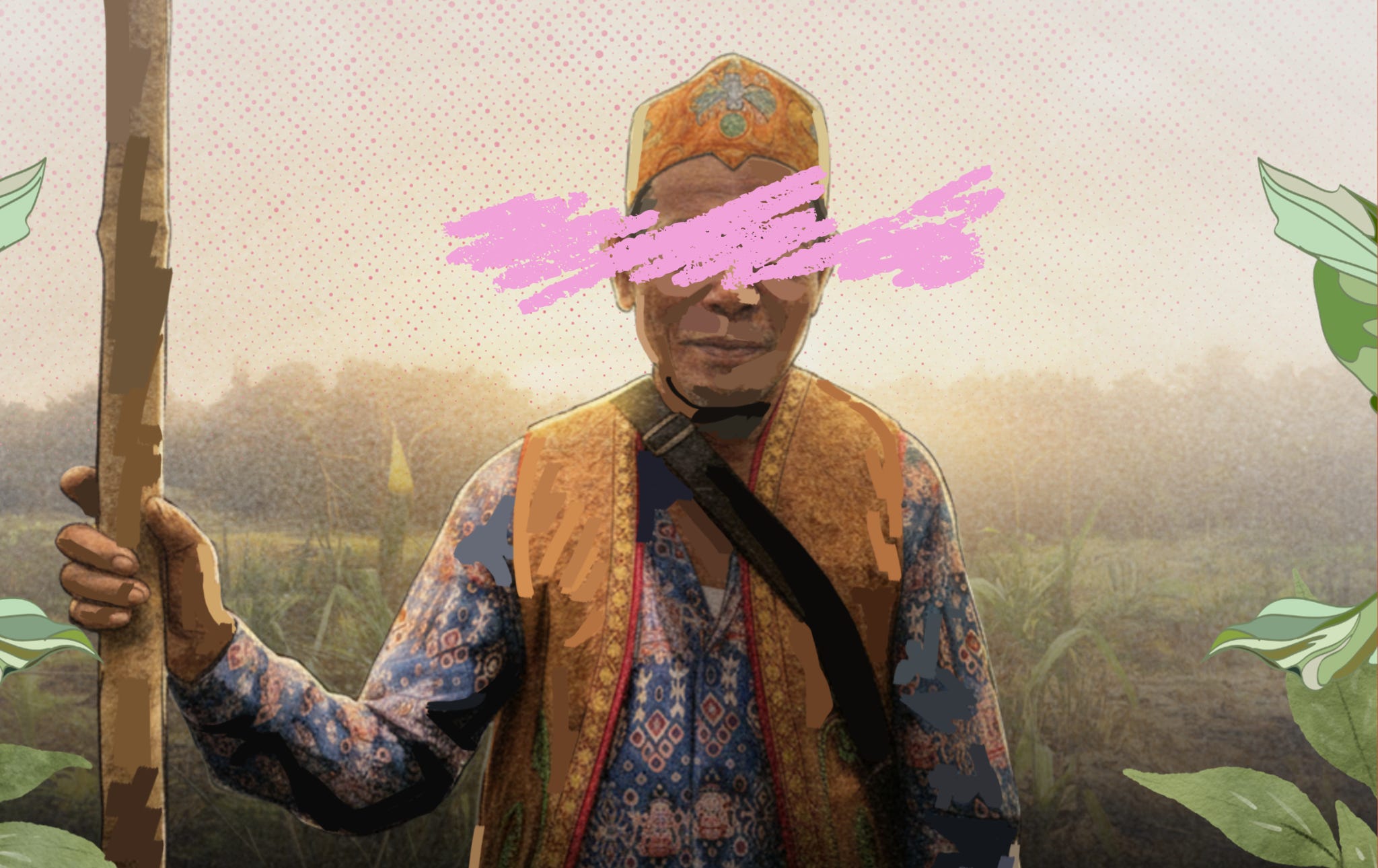
Mornings in the rice fields always begin with a thin mist that slowly lifts as the sun rises. Among the paddies that look ordinary, hope grows without much noise. A grain of rice never announces its contribution to national stability. It simply grows, turns golden, and is harvested.
At the national level, we are accustomed to impressive figures announced in ceremonies. During various harvest events, President Prabowo Subianto declared that Indonesia would achieve food self-sufficiency by 2026. Rice production reached a remarkable 34.71 million tons, an increase of 13.36 percent compared to 2024. Rice reserves strengthened to 2 million tons, the highest in the nation’s history.
The president’s speech at the most recent grand harvest in Karawang Regency earlier this year was not mere rhetoric. Yes, the figures are true. But before those numbers were showcased at the podium and quoted by the media, there was a long and quiet journey.
For nearly two years, I was entrusted with the role of daily data reporting for Kotawaringin Barat Regency in Central Kalimantan. I came to understand that food self-sufficiency is not simply about producing statistical figures showing how much rice appears on presentation slides. At a deeper level, it is a story about coordination repeated time and again.
Sometimes, it is about maps drawn with fingers on mobile phone screens. Or sometimes about small discussions between agricultural community workers and farmers at local community centers, rarely heard beyond those walls.
And here is where this story begins.
When data becomes a game-changer
When I first took on the data reporting task in 2023, I assumed it would confine me to a laptop running ArcGIS. In reality, the work carried me into rice fields, small meeting rooms with community workers, and large-volume statistical dashboards that looked abstract from my desk in Jakarta. Our directive from leadership was straightforward: accurate planting data and spatially coordinated harvest data, so that they could be officially recorded by Statistics Indonesia (BPS).
Originally, planting data was collected by community workers in each village. It was then passed up to the district level, summarized by the local coordinator, and finally reported by the regency agriculture office to the Agriculture Ministry.
Before the ministry’s representatives were directed to come down and conduct spatial data collection, these figures frequently diverged because the method was manual and heavily dependent on individual community workers’ judgment. Several studies confirm that errors in crop area estimation can introduce significant bias into national production projections.
Once we took responsibility for the process, we began slowly and collaboratively with the local community to clean up the process. The goal was to demonstrate that a polygon-based spatial approach using satellite imagery could improve the precision of harvest area estimates, ultimately producing a crop distribution map to support national food policy. Data governance reform at the regency level, therefore, became an essential foundation for the credibility of national self-sufficiency claims.
Across much of the scientific literature on agricultural productivity and remote sensing, spatial accuracy in planting data is regarded as a key to understanding volatile production dynamics. Our foundational reference, “Remote Sensing for Crop Mapping”, emphasizes the role of remote sensing imagery and spatial data in generating detailed crop type maps.
On paper, this is scientific discourse. In the field, it is about maintaining the trust of all parties so that data can be truly accounted for.
Story from the fields: From administrative to spatial
The problem we encountered was classic: planting and harvest data were still managed administratively. They were just rows of numbers without a strong spatial context. Their data differed from the statistical sampling method used by BPS through its Area Sampling Frame (KSA), which calculates harvest area, and the Crop Cutting Survey (‘ubinan’), which estimates productivity. This made me realize that many community workers in Kotawaringin Barat were unable to draw simple polygons for KSA submissions, an act that would have allowed BPS a wider selection of sample areas for harvest measurements.
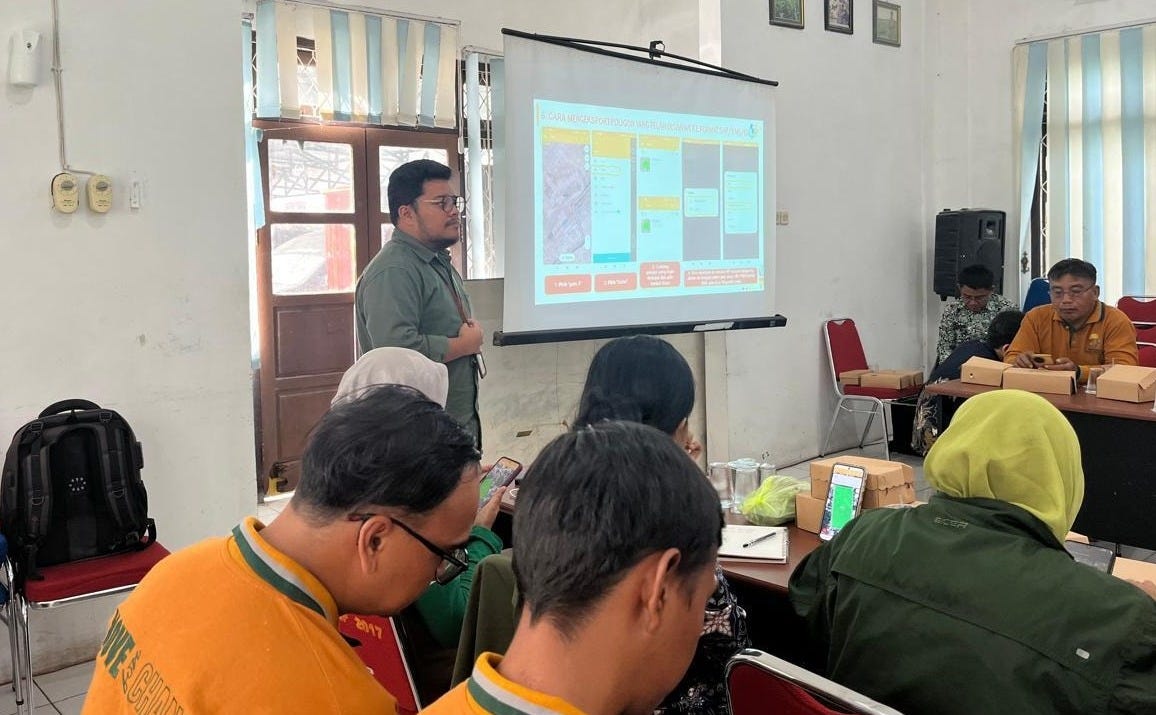
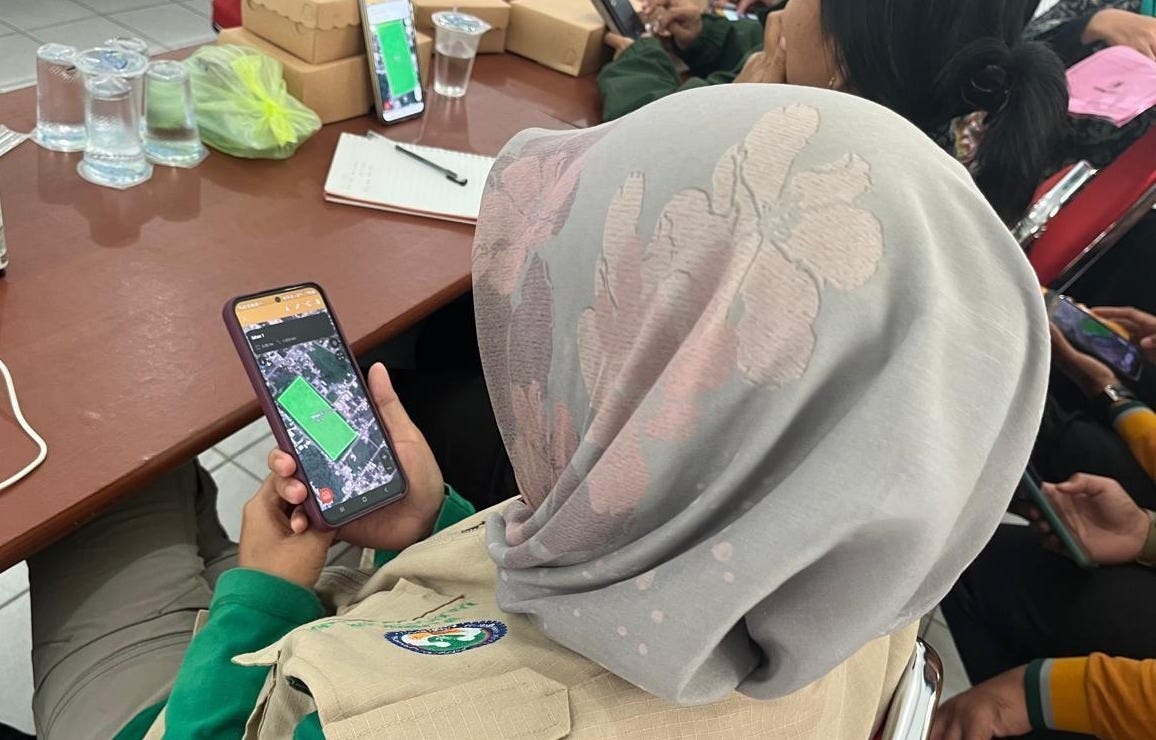
To close this gap, we had to learn a great deal from the BPS team, particularly at the Kotawaringin Barat’s BPS office. Through several meetings with community workers, we introduced and ran workshops on a simple application called Field Area Measurement. This app allows community workers to draw land polygons directly in the field using just a smartphone.
The approach was new in practice but familiar in concept. Previously, community workers and BPS teams received their KSA locations from the central level as given coordinates. This time, the polygons they could now draw have provided spatial context previously absent from daily administrative reports, helping to narrow discrepancies.
Gradually, though not all polygons had yet been mapped and gaps remained between the Agriculture Office and BPS figures, particularly for harvest area, community workers who had been hesitant began to see that the data they collected could appear on a map and become part of the national statistical narrative.
The story of ‘Padi Gogo’: Seen for the first time after decades of invisibility
One advantage of being a civil servant working at the grassroots level is having a greater opportunity to verify quantitative reports through direct field visits. The most emotionally meaningful field experience for me was participating in a communal planting ceremony with farmers growing upland rice, locally known as padi gogo, which also became the central topic of our polygon training sessions.
Upland rice farming, consistent with the customs of the indigenous Dayak Tomun people in Kotawaringin, is practiced through shifting cultivation. This tradition, passed down through generations, involves clearing forested land to grow a variety of crops, including rice, medicinal plants, and horticultural produce. To me personally, this is food self-sufficiency in its truest form.
Upland rice, grown on dry land, holds high yield potential but has often gone unrecorded in harvest data because it is difficult to include in KSA sampling categories, despite contributing 47.16 percent of total rice planting area in the regency (as of 2025 data from the Kotawaringin Barat Agriculture Office). From a technical productivity standpoint, upland rice is drawing increasing attention for its potential to boost production without requiring large additional inputs.
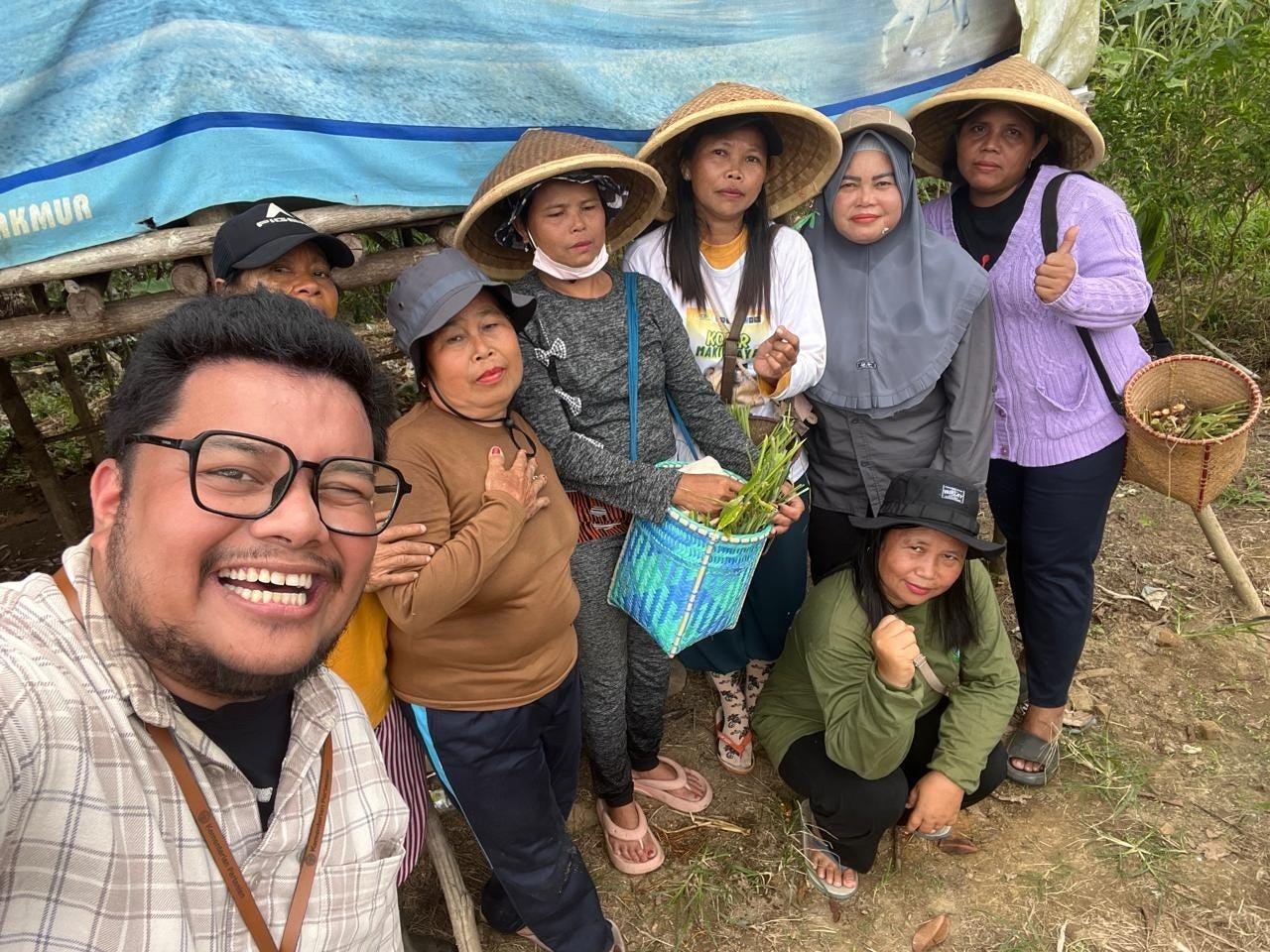
By transferring knowledge to community workers, we gave them a direct role in improving harvest area potential, especially from upland and shifting-cultivation rice. Results from this step remain premature, but once integrated, the data revealed that upland rice’s contribution to production was quite significant.
From estimation to precision
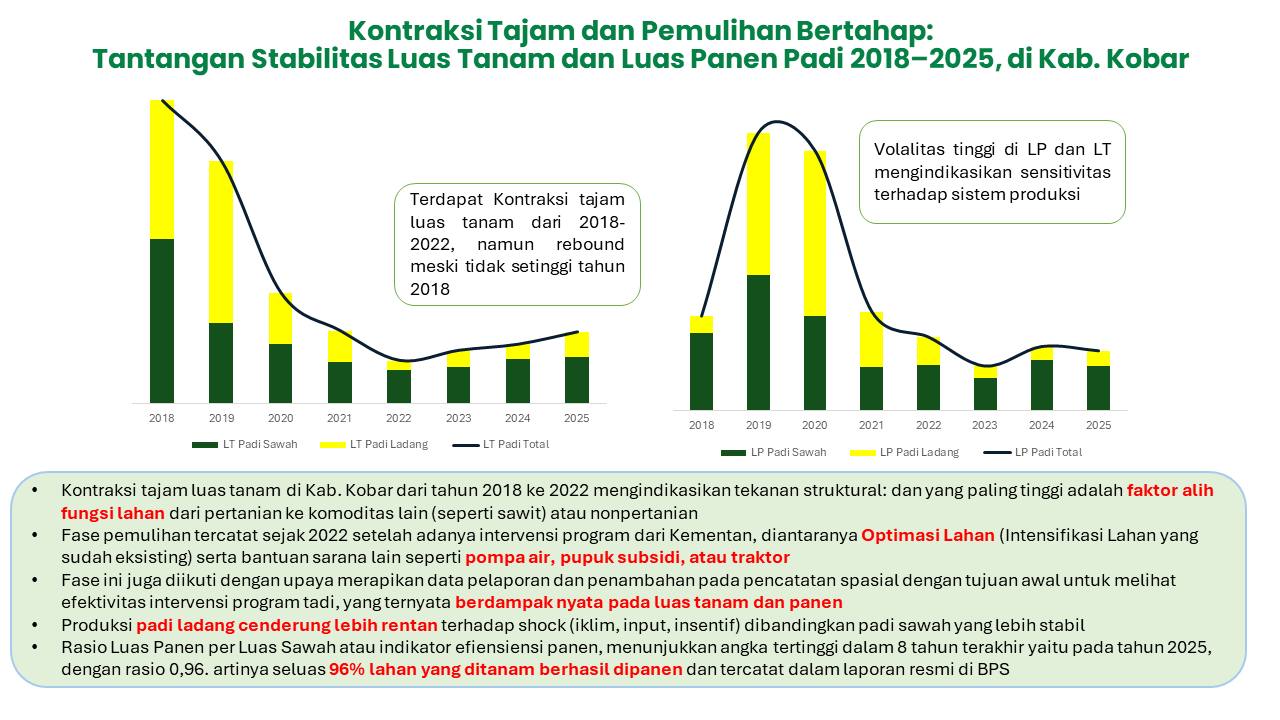
Our “small intervention” produced quite the quantitative impact.
A sharp contraction had, in truth, been anticipated. Structural pressures, particularly the conversion of rice paddies to non-rice commodities, like oil palm, represent a serious threat. Data from the Kotawaringin Barat Agriculture Office shows that the certified rice field area has continued to decline, reaching only 1,621 hectares in 2024, with further declines ongoing.
In 2025, irrigated rice planting area increased by 4.93 percent from the previous year, while upland rice planting area grew by an even larger 68.98 percent, adding 253 hectares, bringing total planting area to 718 hectares, an increase of 21.08 percent from the year before.
On the harvest side, irrigated rice harvest area fell by 10 percent due to crop failures in several food production zones and flooding, pulling overall harvest area down by 6.72 percent to 593 hectares. Regardless of structural improvement efforts, the rice sector continues to demonstrate a high level of vulnerability to climate-related shocks, which remain the greatest risk to final production outcomes at the micro level.
The effort to clean up data and record polygons made these interventions more measurable. While the gains cannot be attributed solely to data improvement and land intensification, the work of documentation in this area holds the promise that previously unrecorded potential can be captured more fully going forward.
Our innovation was later documented and entered into the ministry’s Anti-Corruption System hackathon, combined with efforts toward an early-warning system for agricultural infrastructure. We won second place. For me, the institutional recognition and validation offered by Agriculture Minister Amran Sulaiman was a first step, a signal that data-driven reform carries strategic value, even if realizing that value fully remains a long-term aspiration.
Epilogue: A reform grown from small, quiet details
I remember the repeated trips to Pangkalan Bun. I remember long discussions with community workers who were initially hesitant to use digital tools. I remember farmers’ hands pointing to the boundaries of their land, then smiling when they saw their rice plots drawn neatly on a map. I remember reconciliation meetings with BPS that stretched into the late afternoon, making sure that not a single hectare was double-counted or overlooked.
The reform we carried out never made headlines. Yet it was from these seemingly small processes that production improved, data grew more credible, and the work eventually became the material of presentations delivered by officials from podiums.
Yes, food self-sufficiency is declared by the central government. But it is built in the regions. It lives in the details. A quiet reform, yet a real one. One that is not always given a stage, but that holds the stage up from beneath.
Someday, in the years ahead, when I look out over golden rice fields stretching across that small corner of Central Kalimantan, I will know that the quiet work was not in vain. It may not always be celebrated. But it grows. And it strengthens the nation.
To me, that is what true reform looks like.
