

The author is a civil servant at the Southeast Sulawesi Regional Revenue Agency (Bapenda). This article is a winning submission to The Reformist Insiders Writing Competition 2026. It reflects the author’s own analysis and views and does not necessarily represent those of The Reformist.

This article is also available in Indonesian here.
During my studies in Japan, fulfilling various administrative obligations rarely felt like a burden. About a five-minute walk from my apartment stood a Yamazaki konbini (convenience store), open nearly around the clock. There, I would routinely stop in to pay everything from health insurance premiums to rent to various other administrative fees.
The process was disarmingly simple. I would hand a payment slip to the cashier, who would scan it with a warm smile as though it were no different from ringing up a cup of coffee and a snack. Once the transaction was done, the slip would be stamped with a distinctive red Japanese seal, a hanko, faintly reminiscent of the stamps one sees in grand Asian historical epics.
No long queues, no shuffling between counters, and it could all be done at any time, even on weekends. One cashier, one scanner, every obligation settled in minutes. It felt like a small, unremarkable thing, and yet in that moment, I felt the presence of the Japanese government, even without ever having voted or met any of its representatives face to face.
When I returned to Indonesia in 2023, the reality I encountered back home in Southeast Sulawesi felt starkly different. To pay a single type of vehicle tax, I had to queue at the Vehicle Document Registration Center (Samsat) office for thirty minutes, sometimes hours. What should have been a straightforward errand often dragged on, as people were forced to go through multiple service windows just to complete a single payment.
That contrast planted a simple question in my mind: why does public service, which is supposed to make life easier, so often end up making it harder? That question was ultimately what drove me to request a transfer from my previous post at the Economic Bureau of the Southeast Sulawesi Provincial Government to the Regional Revenue Agency (‘Bapenda’) of Southeast Sulawesi, the body directly responsible for managing regional taxes and levies.
As luck would have it, the timing could not have been better. Given my academic background and research focus on regional revenue management during my studies in Japan, the incoming leadership entrusted me as the person in charge of the Acceleration and Expansion of Regional Digitalization (P2DD).
The assignment aligned perfectly with what I had set out to do: make it easier for people to pay their taxes and levies. But the task began from a difficult starting point. At the time, Southeast Sulawesi ranked last among all 34 provinces in Indonesia in the implementation of Regional Government Transaction Electronification (ETPD).
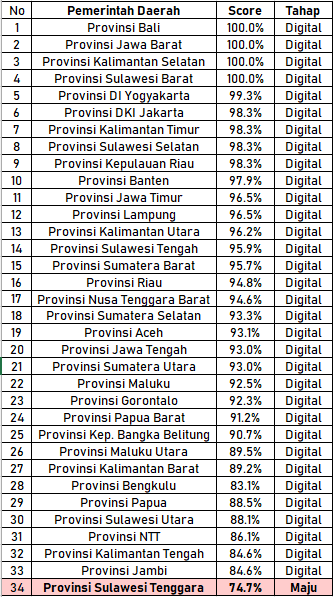
In other words, our province sat at the very bottom of the national rankings, behind even Papua at the far eastern edge of the country. This index essentially reflected what the people of Southeast Sulawesi had long been living with: the vast majority of regional tax and levy payments were still made in cash, through physical service counters. It was far from ideal, and particularly burdensome for those living far from service centers.
Reforms under local constraints
In early 2024, as we began pushing for the digitalization of regional payments, the first obstacle we faced was infrastructure. Southeast Sulawesi’s regional development bank, Bank Sultra, was still in the process of strengthening its digital systems.
As the primary financial partner of the regional government, the bank played a central role in the payment ecosystem, but the technology needed to support integrated digital payment channels, including payment gateways, QR payments, and multi-platform integration, was not yet fully in place. This left us with an uncomfortable choice: waiting for the systems to be ready meant preserving an inefficient status quo, while forcing change without the necessary infrastructure risked creating new problems of its own.
In the end, we chose a collaborative approach. Through discussions facilitated by the Bank Indonesia Representative Office for Southeast Sulawesi, we began exploring the possibility of working with an external payment gateway provider to lay the early groundwork for a digital payment ecosystem.
Bank Indonesia recommended Espay, a payment technology company with experience integrating government payment systems into national digital payment networks. That recommendation became the starting point for a partnership between Bapenda Southeast Sulawesi and Espay, though building that collaboration was by no means straightforward.
Facing bureaucratic skepticism
Implementing the digital payment system required a budget support of around Rp 195 million to cover installation, rental costs, and payment gateway infrastructure integration. In the context of a provincial government budget, this was a relatively modest sum.
But because regional levy revenues had been volatile over the preceding five years, the Regional Financial and Asset Management Agency (BPKAD) questioned the urgency of the investment. In one meeting, they raised the concern that allocating additional funds to an unstable sector was not an easy decision, with no guarantee that the new system would produce a positive impact on regional revenues, and a real possibility that it could actually harm the regional finances.
In response, I posed a question of my own.
“How can we expect anything to change if we keep using the same approach year after year? Digitizing the tax sector is a new approach, and one we are obliged to try.”
I tried to make the case that in efforts like this, there are no guarantees. What we can do is act based on experience and best practices from other regions, such as Jakarta, West Java, East Java, and beyond. If the system works, it can serve as the foundation for something much larger. And if it falls short of expectations, there would have at least been a transfer of knowledge, both within government and among our strategic partners, giving everyone the experience and understanding needed to build similar systems in the future without incurring the same costs again.
That argument proved persuasive, and the funding was approved.
When digitalization began to show results
When the partnership with Espay was finalized and rolled out across Southeast Sulawesi, it enabled us to implement a QR-based regional levy payment system. Through this system, people could pay their levies via a range of digital platforms, including mobile banking, e-wallets, and any other application supporting the national Quick Response Code Indonesia Standard (QRIS) infrastructure.
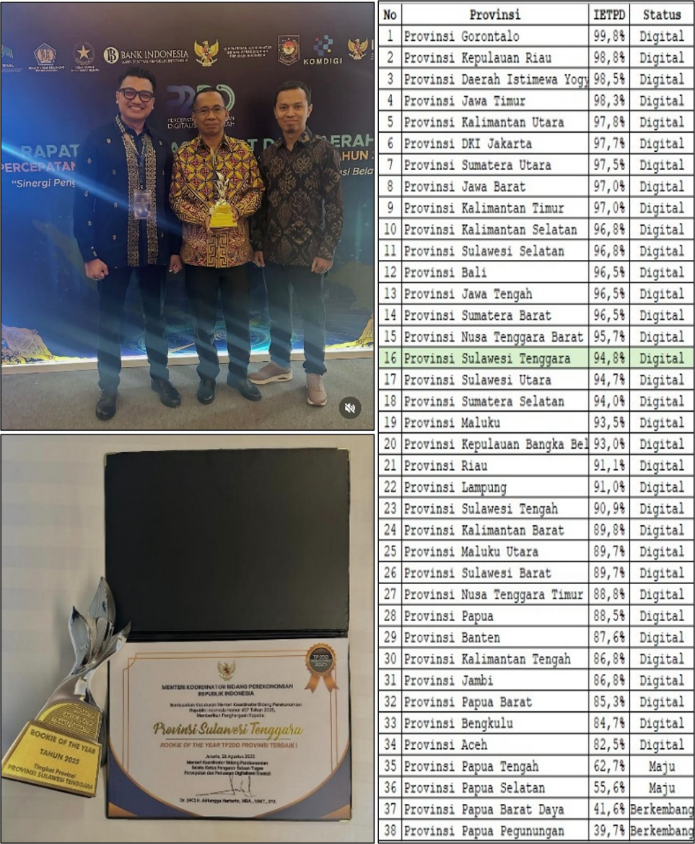
For the first time in the region, residents no longer had to carry cash or visit a bank counter just to fulfill their tax payment obligations. By the end of 2024, the impact had begun to show. Several regional agencies responsible for collecting levies recorded revenue growth for the first time in years. Southeast Sulawesi’s ETPD ranking also climbed from 34th to 27th out of 36 provinces in Indonesia.
On a personal note, I was honored to receive an award from Bank Indonesia Southeast Sulawesi as the “Most Accelerative Individual Champion of Regional Government Digitalization.”
Expanding access to digital services
In 2025, we launched a new program called SIGAP, a proactive outreach service designed to bring tax services directly to the public. Rather than waiting for taxpayers to come to government offices, the SIGAP team actively visited communities, businesses, and public spaces to help people access digital payment services.
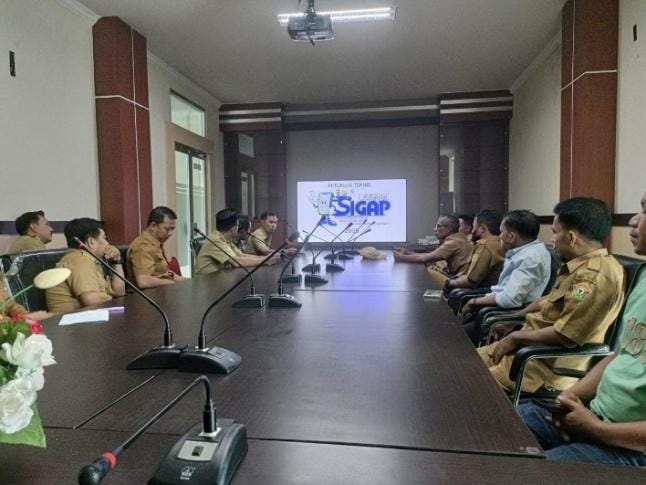
We also began developing a digital administration platform for businesses, particularly those in the mining sector, which contributes significantly to regional revenues. Through this platform, companies can register, upload documents, and process payments electronically, without needing to visit a government office in person. These incremental steps gradually changed the way people interact with local government services.
A digital payment culture began to take root. Southeast Sulawesi’s digitalization ranking rose again, this time to 16th, and the province went on to receive a national award from the Coordinating Ministry for Economic Affairs, recognized as “Rookie of the Year” for the most rapid digitalization acceleration in Indonesia in 2025. And in December 2025, the provincial government recorded a surge in locally generated revenue of more than Rp 100 billion, an increase of 8.12 percent compared to the same period in 2024.
Leaving behind footprints for future reformists
In the end, this is not simply a story about shifting tax payments from physical counters to virtual ones. It is about a process built up layer by layer: establishing trust between institutions, answering the doubts of the bureaucracy, and learning together to understand systems that were genuinely new to everyone involved. The road to change is still far from finished, and there is much work to be done. But this small journey has left behind at least one lesson worth passing on, not because the story is extraordinary, but because it grew from a simple desire to deliver better service to the public.
Perhaps in time, people will no longer remember who started it. But hopefully the spirit behind it endures: that within the bureaucracy there is always room for small ideas to grow, for the courage to try something new, and for the hope of continually improving how the state serves its people.
If this story ever reaches those who feel the same restlessness, perhaps it can serve as a reminder that reform does not need to wait for a grand moment. Sometimes, only courage is needed to take the first step, and the persistence to see it through until it means something, so that this reform does not stop as this story comes to a close, but continues in the transformative steps for those who will come after.
