

The author is the Founder and Chief Experiment Officer of Think Policy with over a decade of experience in policy advisory. She holds an MPP from Harvard Kennedy School. This article reflects the authors’ own analysis and views and does not necessarily represent those of The Reformist.
“A policymaker is cursed to live in the second-best world,” warned Chatib Basri, the former finance minister who prefers to be called Dede (‘without Pak, please!’), as he has reminded me more than once.
Anyone who studied economics or public policy understands this: at its core, public policy is about tradeoffs. When faced with Options A and B, choosing one means letting go of some degree of opportunity cost. The discipline is all about minimizing this ‘loss’ across scenarios. For example:
Should a government increase the number of sugar imports? Hold off, and domestic prices spike, leaving households squeezed and headlines unforgiving. Act too quickly, and the imports flood a market that didn’t need flooding, hollowing out local farmers.
Technology C or W for a digitalization program? Option W avoids locking in annual subscription costs but demands a steep upfront price. Option C spreads the cost over time but ties the agency to a vendor for years.
Should Rp 268 trillion go towards the free nutritious meal (MBG) program? For this one, I’m not entirely sure what the deliberation looked like. You’d have to ask the people in the room.
No decision can please everyone. There will always be winners and losers in any scenario. That is why criminalizing public policy decisions has a fundamental flaw: it fails to understand what public policy actually is about.
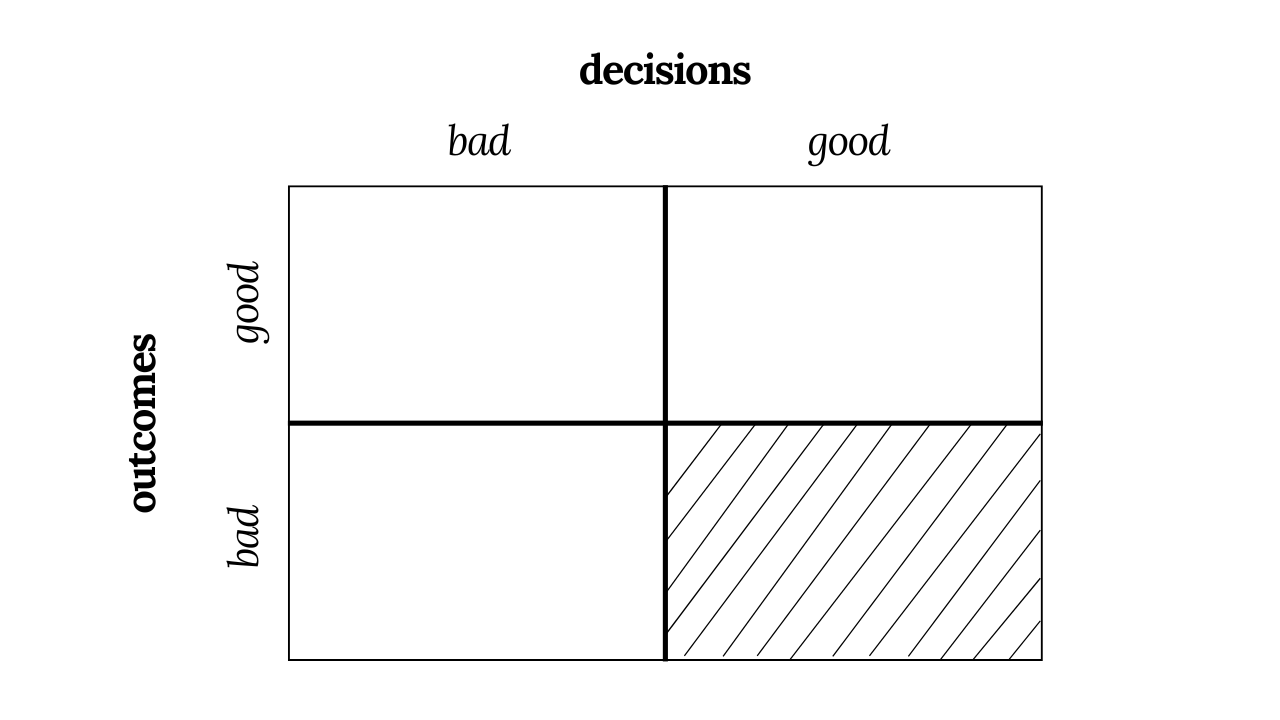
Sometimes, good decisions may lead to bad outcomes. That doesn’t make the decisions bad.
Of everything I studied in public policy school, this insight blew my mind the most. Managing something as complex and layered as national-level governance means accounting for a vast range of risks, including those that cannot be predicted at the time a decision is made.
A good decision, therefore, cannot be measured by good outcomes alone. It must be evaluated by the quality of the decision-making process itself:
Was it made based on the best available expertise and information at the time the decision was taken?
Was it made in consultation with those who would be significantly affected?
The world is puzzled as Indonesia continues to criminalize policy decisions
A policymaker is accountable for weighing all factors carefully, but they should be given room for bad outcomes.
When a legal provision is defined with rubber-like elasticity, every single decision becomes vulnerable to potential criminalization. Especially when, as we are all well aware, judicial processes are not always free from political pressure.
It’s worth acknowledging that not all cases are identical in degree:
Tom Lembong’s sugar import case last year comes closest to a pure example. The decision he made—authorizing sugar imports to stabilize supply—was a textbook tradeoff call.
Nadiem Makarim’s and Ibrahim Arief’s Google Chromebook case is more complicated. There are unresolved conflict-of-interest allegations that go beyond policy judgment.
Regardless, what these cases expose is a law that allows the line between administrative error and criminal liability to be drawn by whoever holds political power at the time, despite the absence of criminal intent.
There are far greater future consequences than material loss: we may turn into a nation afraid of innovation, where institutions end up attracting loyal operators rather than expert problem-solvers.
Being a policymaker is a moral vocation that demands the highest level of competence. It is a job requiring genuinely hard skills, but one that is also a calling. Policymaking should be an arena filled with the nation’s best problem-solvers, with the strongest moral fiber. Criminalizing their judgment—without evidence of corrupt intent—does not invoke justice. It empties the room of anyone with the audacity to make hard calls.
So how do we prevent or punish a policy that actually harms the public?
The answer is governance. We can design processes that enable deliberation and accountability to occur before and during decision-making, rather than retroactively through criminal charges.
Layers of bureaucracy within the executive. There’s a reason mandates and authority are distributed across the President, ministers, and layers of civil servants below them. Those layers exist to create filters before any decision touches the ground.
Legislative and judicial checks and balances. For consequential decisions—like the national budget—the executive must secure legislative approval. In a healthy democracy, elected representatives have the power to halt executive policies deemed harmful.
Meaningful public participation. From formal mechanisms like Regional Development Planning Forums (Musrenbang) and public hearings to social media and street protests, governments should have ways to genuinely understand what the public wants—and why.
Capitalize on the electoral cycle. If nothing else, casting our vote is how we choose whether to continue a policy direction—or change course entirely.
I’m starting to think that injustice is worse than death. There’s nothing you can do about death, but injustice means that there are people collectively allowing it to happen.
I said that to my husband after watching the verdict videos for Ibrahim Arief and the prosecution’s charges against Nadiem. I cried for quite a while that night. I didn’t know why it caught me off guard because I already expected this to happen—I am not naïve about the politics of law and what is at play here.
My grief, I think, stems from witnessing the loss of humanity and agency of the entire legal system under political pressure.
I would never fully understand what incentives or threats each legal professional faces when they sit in that prosecutor’s chair or on that judicial bench. It’s impossible to know what they’re thinking, who they need to protect, or what other difficult considerations they carry.
What I do know is that millions are watching and understanding what is happening (the context beyond whether Nadiem is guilty or not guilty), worrying over the same potential injustice, while those with slightly more agency to change the outcome decided to stay put.
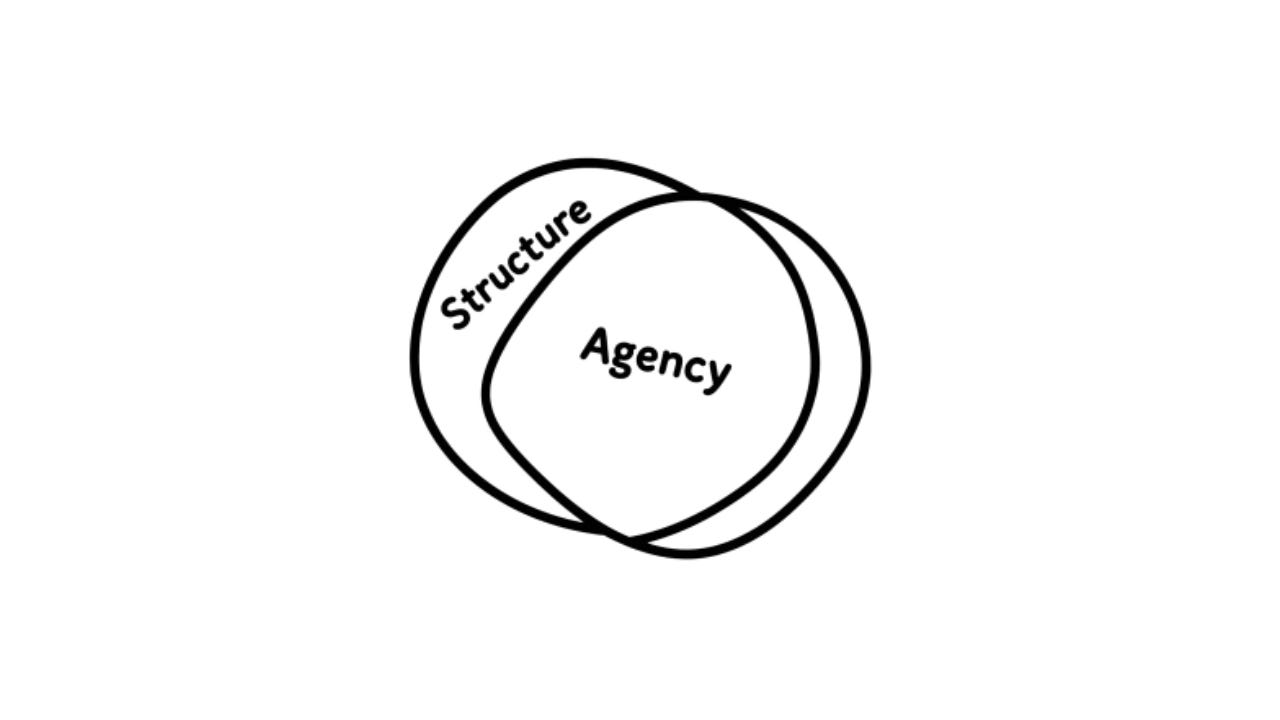
In the middle of all this, I hold on to a thread of hope in Josepha, the high school student from Pontianak who called out the panel of ‘expert’ judges in the Lomba Cerdas Cermat MPR. She used her agency to resist injustice.
Sometimes, what separates us as human beings is the split-second when we get to choose to let something happen or actually attempt to do something about it. Or in her case: to raise a hand, question a verdict, and try to change the outcome.
Perhaps we are all deeply invested in Josepha and Team C, because if we can’t get justice anywhere else, let us at least protect it for the next generation.
May those who still have the privilege to resist injustice keep resisting, no matter how small the space may be.
