

Yobel and Donny are strategists at the Global Alliance for Incinerator Alternatives (GAIA). Together, they have 12 years of experience advancing zero-waste solutions in Indonesia and the Global South. They advocate for decentralized solutions to prevent short-lived climate pollutants. This article reflects the author’s own analysis and views and does not necessarily represent those of The Reformist.
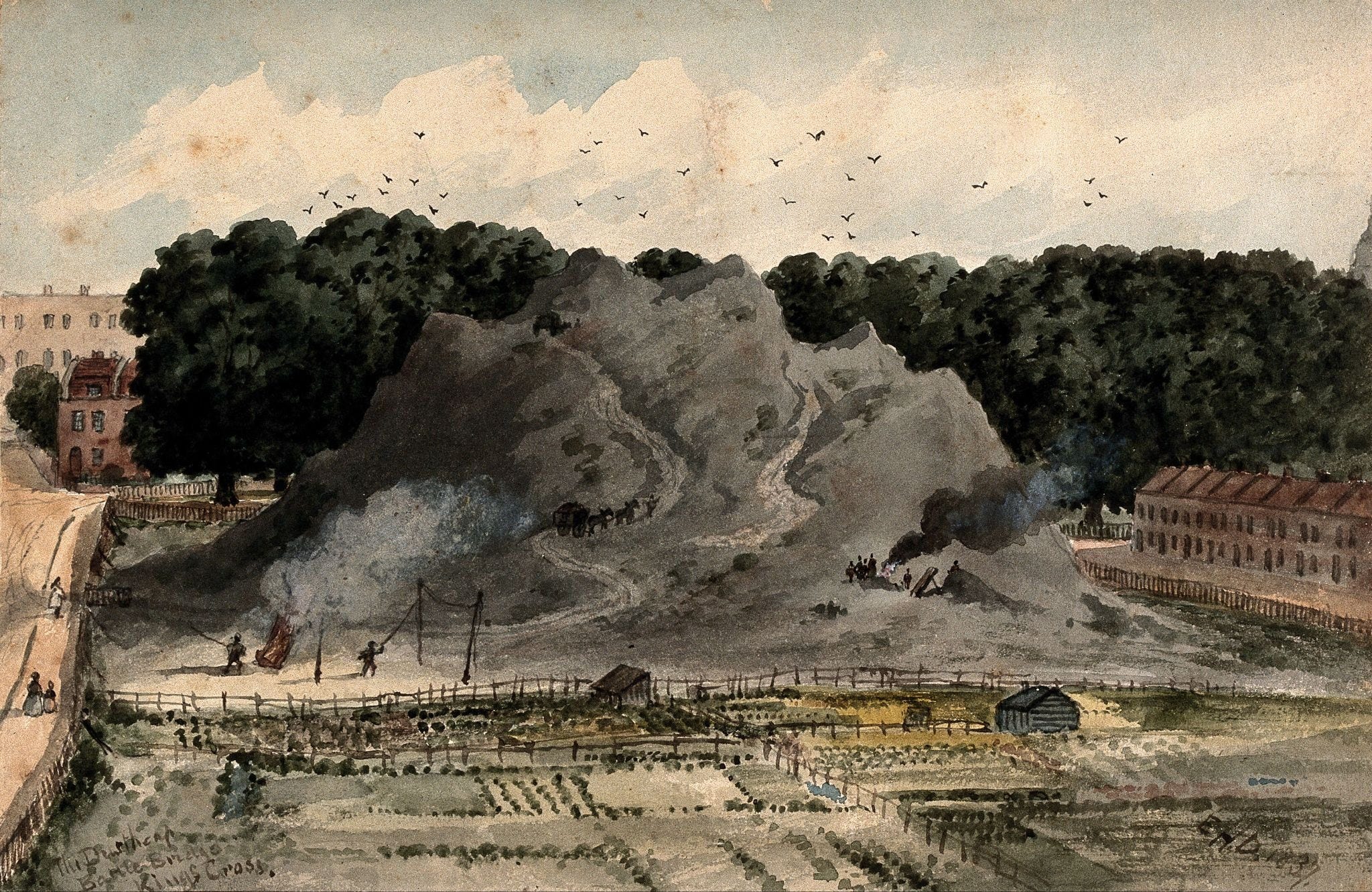
In 2023, local governments across Indonesia suddenly became busy firefighting at dumpsites, costing taxpayers billions of rupiah to extinguish a fire at a single dumpsite.
The budget for this firefighting came from the region’s annual emergency fund, or from whatever was left of its waste management budget (already sparse, typically less than 1 percent of the region’s total budget) that should have been used instead to improve the waste management system. And the impact went way beyond these numbers in the accounting report, potentially causing prolonged health hazards for anyone caught in the smoke.
This year, we are on course for the second episode of that chaos again. As we started writing this in July 2026, the Tangerang Regency administration was busy extinguishing the fire at Jatiwaringin dumpsite (‘TPA’). Meanwhile, similar events are flaring up at other dumpsites (e.g., TPA Cipayung, ex-TPA Panembong).
Interestingly, dumpsite fire frenzy was never a topic before 2023. Today, it is emerging as a recurring theme.
The claim that the 2023 dumpsite fire frenzy is bound to recur is not without merit. This year, Indonesia is facing another El Niño cycle. It is a cyclical climate pattern (typically every 2-7 years) in which trade winds in the south shift, creating hotter temperatures, stronger winds, and lower humidity in Indonesia. These conditions are perfect enablers of dumpsite fires, as they make it easier for surface- and deep-level piles of waste to ignite.
As if the cycle itself is not enough, this year we might be facing a super El Niño, with current indicators showing that this year’s impact would be double that of 2023. Conditions are expected to worsen and peak at year-end. Therefore, strictly from a climate standpoint, dumpsite fires can only become more frequent and more intense as we approach the end of the year.
We understand that the way we have written this article so far suggests we are cursed with the uncontrollable wrath of nature. However, that is not the case.
Like any combustion process, landfill fires require (1) a trigger; (2) a condition; and (3) fuel. The trigger is the buried waste getting very hot and catching fire on its own. The condition is the environment created by El Niño. And the fuel is the methane trapped in the dumpsite piles. While the trigger and the condition are practically out of our control, the fuel is different. The presence of methane in a dumpsite is manageable and can be reduced to a significant extent.
Now, we should all ask the real question: do we want to optimize the budget to fix preventable methane emissions, or do we want to waste resources by splashing water into dumpsites every 2-7 years?
Bear in mind, the more frequent this phenomenon becomes due to inaction, the greater the unnecessary fiscal burden, the less effective the waste management system becomes, and the higher the cost to long-term public health, which can translate to declining productivity.
Why dumpsite fires are rampant in Indonesia
Here’s how fire started at a dumpsite:
Methane is a product of the anaerobic decomposition of easily degradable materials, including food waste, garden waste, and paper. At a dumpsite, this process takes place in the deeper layers of the waste pile. As a new layer of fresh waste enters the dumpsite each day, the older waste is buried deeper and deprived of oxygen, allowing anaerobic processes to take place. This process continues in a loop for years, allowing methane to build up in a dumpsite. Compounded by new waste arriving every day, this effect can be amplified by orders of magnitude.
In Indonesia’s dumpsites and waste management, this process happens at a massive scale and is messy for three different reasons.
First, food, garden, and paper waste make up more than half of the waste that ends up in dumpsites, according to the National Waste Management Information System (SIPSN); in major cities, most of it is left to rot, underscoring the scale of methane generation there.
Second, more than 300 of Indonesia’s 500 dumpsites operate under an open dumping system without a well-designed gas ventilation system, allowing methane to leak to the surface and easily ignite.
Third, waste entering landfills is mixed, so the gas is not pure methane but a complex mixture that can harm living beings exposed to it.
These nuances explain the pattern of dumpsite fires in Indonesia, which are massive, hard to extinguish, and toxic. Because easily degradable waste is the most dominant waste composition in Indonesia overall, dumpsite fires occur at many dumpsites across the country. As explained in the mechanics, this abundance, combined with widespread distribution and surface exposure under the open dumping system, allows fires to spread easily from one point to another.
Finally, burning highly contaminated methane (and other combustible waste) releases toxic fumes into the air, which, when carried by strong winds, expose nearby locals and can eventually cause at least acute respiratory issues.
From this breakdown, we can see that the root of the problem is easily degradable waste in the dumpsite, compounded by heavy reliance on open dumping systems, creating the massive hazard faced by communities. That said, to minimize the risk of dumpsite fires, we must ensure organic waste does not enter the dumpsite, and there are attainable pathways to do so.
Summoning the “gotong royong” spirit for waste management
For too long, we spent too much time pointing fingers when it comes to solving the waste crisis. The truth is, we cannot solve it unless communities, waste workers, private entities, the government, and CSOs work together.
Now that we have a critical, urgent common goal, we need to rethink how we manage organic waste. We have to shift away from our typical downstream-focused mindset and focus on the upstream.
1. Decentralization
Handling many tons of organic waste — likely to be mixed — at a centralized downstream facility is a suicide mission. Instead, we can decentralize waste treatment by leveraging the smallest possible community level to independently treat its organic waste upstream.
A proven example is the ‘Neglasari’ pilot project in Bandung, led by Yaksa Pelestari Bumi Berkelanjutan (YPBB), which integrates organic waste treatment (composting and the BSF method) with food production at the sub-district level.
This project embodies Indonesia’s “gotong royong” (hand-in-hand) spirit, where community, academia, CSO, waste workers, government, and donors collaborate to build and operate the system. In just 1 year, the project reduced its methane footprint, developed a financially viable treatment system, improved community resiliency, and created jobs (soon-to-be published report).
From a cost perspective, this approach is not merely a utopian dream of practitioners in the waste management field, but a far more cost-effective alternative to centralized, high-tech infrastructure (you can read more in detail on page 30 of the linked report). Moreover, by enabling a decentralized approach, we reduce the risk of cross-contamination and allow recyclables management to thrive as well. This adds value to the circular value chain.
2. Organic waste treatment as a part of the food system
The product of organic waste treatment was never meant to be the finished product. Instead, it should be connected to the larger conversation of the food system in the community. By connecting these dots, treating organic waste expands into the conversation of improving communities’ quality of life and is not limited to hazard prevention.
The Bandung City government has set an example by integrating two programs: ‘Buruan Sae’ (food security and urban farming program run by the city’s Food and Agriculture Agency) and ‘Gaslah’ (the city government’s program for upstream organic waste treatment). The city government spearheads this initiative, in collaboration with communities and CSOs, to drive the integration.
The idea is that households and communities in the Buruan Sae program can use treated organic waste (in the form of compost or BSF larvae) from the Gaslah program as input or feedstock for food production, ultimately creating a closed-loop food system. This shows that with the right political commitment, waste management can be productive while also addressing multiple urban challenges.
3. Treatment-as-a-service?
Ultimately, the goal is to ensure as little organic waste as possible goes into dumpsites. Even more importantly, profiting from sales of products from organic waste treatment (e.g., compost and BSF larvae) should not be endorsed as the main revenue source for a sustainable waste management practice. This framing matters because waste management is a cost-heavy sector that often requires subsidies and, therefore, government commitment to allocate budget to sustain operations.
It is telling that even with a basic collect-transport-and-dump method, the system often collapses due to a lack of available government funds. Let alone introducing a treatment solution with more associated costs.
The key to this reform’s success lies primarily with the government. To drive this systemic change, the provision of essential waste management services for collection and separation, especially in the form of fixed capital assets as the highest cost component, will be crucial (see pages 28-29 of the linked report).
Political will to resolve the challenge will show in the budget it commits to support setup and operations.
A race against time
Those three reform principles are set with an overarching output in mind. By shifting the mindset on where and how to treat organic waste, and how the financial model should run, we enable a solution that is rapid, replicable, low-tech, and cost-effective. These are the characteristics we need to address the methane challenge.
This ongoing crisis demands a fast, actionable solution with a low barrier to implementation. Moreover, methane is a short-lived climate pollutant, which means we don’t have the luxury of preparing a dandy plan; we are in a race against time every day to prevent more from being generated in dumpsites.
More methane is being generated as you finish reading this article, which means more of your tax is likely to be spent on throwing water on a pile of garbage. Is that something that you consent to?

