

The author is the Head of Unlearning at Think Policy with nearly a decade of experience in designing and advocating for high-quality learning initiatives. She holds a master’s in education from Columbia University. This article reflects the authors’ own analysis and views and does not necessarily represent those of The Reformist.
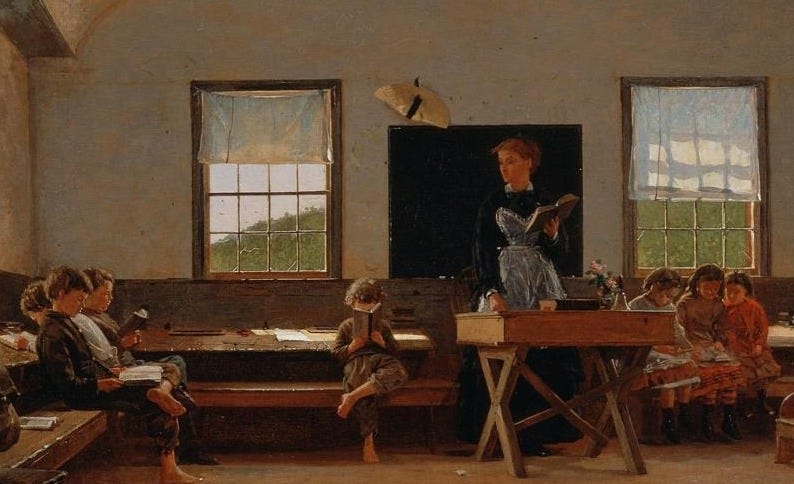
The latest K-Drama craze, “Teach You A Lesson,” has sparked heated discussion about the roles of schools, teachers, and the government in teaching kids to be good people. Watching it made me think about our own education system: Do we have anything in our curriculum that ensures our kids know how to be good people and, by extension, good citizens?
In the upcoming 2029 elections, Gen Z (born 1997-2012) is predicted to dominate the voting demographic. Meaning, the next election year will be a big day for the digital natives and, for some, first-time voters.
Voting is a pivotal decision-making process for a good citizen. The question is: are they prepared? One is choosing their leaders and regulators, so two minutes in a voting booth could affect a voter’s life for years to come (it is, quite literally, life-changing). So, shouldn’t voting be something that one is well-prepared for? And even more importantly, shouldn’t students be aware of their duties after casting their ballots?
If a student could spend days and nights preparing for university entrance exams, shouldn’t an important civic duty get a somewhat similar preparation?
Gen Z has proven to be more politically aware. Thanks to the internet, they grew up with endless information at their fingertips, which has affected their media consumption and literacy, as well as their exposure to global socio-political and economic issues. A UK study in 2024 even showed that Gen Z are more willing to express their moral convictions, including through civil disobedience. In a nutshell, younger generations are more digitally literate and unafraid to express themselves.
But one question remains: Where is the best place for young adults (17- to 19-year-olds) to learn about this, if not school, where they already spend a great chunk of their time?
We already have the answer to that: Civic Education, or, as you might be more familiar with it, ‘PPKn’. The tool for teaching kids about civic duties has been part of our curriculum for decades. Though whether or not it has been effective–or even enough–remains to be seen.
It’s time we take PPKn at school seriously
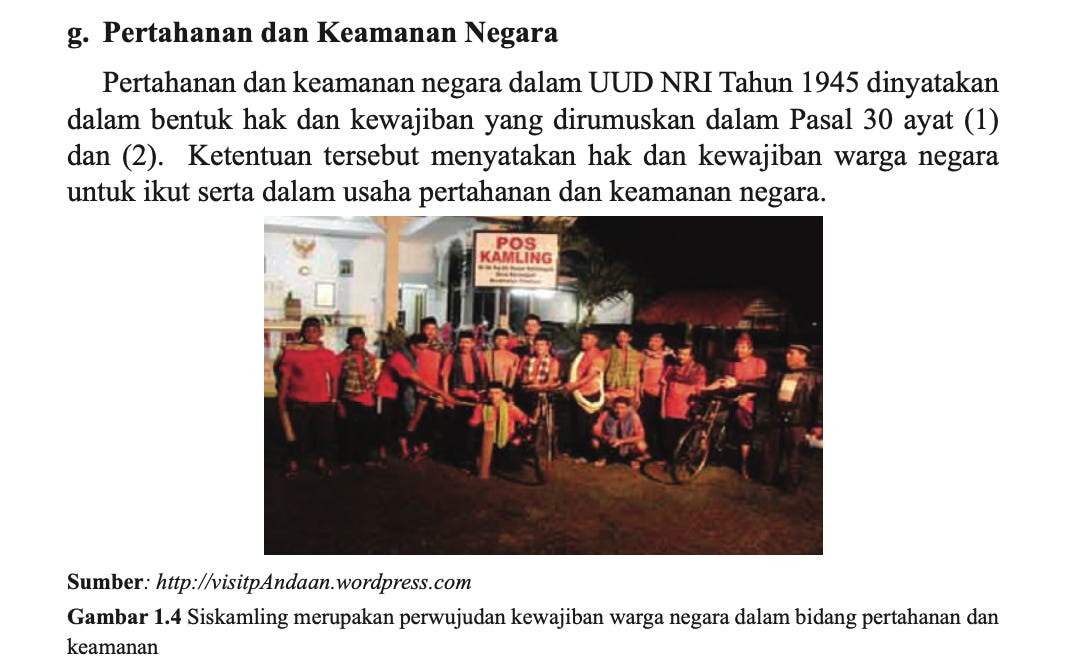
Let’s first walk down memory lane. What do you remember from your PPKn class at school? We had it in elementary school, junior high, high school, and even at universities. But if you’re like me (the old me, at least), you might only remember being taught that civic duties are helping the elderly to cross the street, never skipping classes, or joining the neighborhood rotating night watch (siskamling).
That was how a “good citizen” was portrayed for years, and unfortunately, it is still the case today. Grab a 12th-grade PPKn book now, and this is what you will find.
Civic education is one of the most strategic platforms through which a state can deliberately reproduce its ideological values across generations. In Indonesia, PPKn clearly reflects this pattern. It has undergone multiple name changes and curricular overhauls, but its core logic has remained consistent; it adapts to serve the political needs of the era in which it operates.
The pattern is visible across our history. After independence, our civic education focused on instilling the value of patriotism and guiding the newborn country as it began its journey. Over time, its scope expanded to discuss the role of government, civil rights, and civic duties. During the New Order, PPKn taught the country’s history, our geographical presence, our constitutions, and the manifestation of Pancasila as our core value.
So, is PPKn, our civic education, good enough? Before we answer that question, let’s take a quick world tour.
PPKn around the world
In democratic countries, civic education is a platform for nation-building. Most civic education subjects worldwide cover topics such as history, core values and principles, culture and norms, and political awareness. Some Scandinavian countries (e.g., Denmark, Finland, and Sweden) even incorporate intergenerational topics such as climate change and justice, digital citizenship, and economic inequality.
Some newly democratic countries, on the other hand, shared a common tendency to teach their “dark” history by building the discourse around “unity”.
South Africa, for example, has reformed its high school history curriculum to “heal the divisions of the past” — taking lessons from its painful apartheid history to build a united and democratic country. Another example is Rwanda, which in 2007 launched its civic education program, called “Itorero,” aimed at enabling Rwandans to reacquaint themselves with the values and taboos of their culture under a post-genocide government.
What about Indonesia?
Well, if it’s up to me, I say that our civic education has long been stuck in a superficial portrayal of a utopian society, in which no conflict is ever clearly and rightfully explained (why did conflicts happen, and how?), and reality is too distant (or perhaps too scary) to be put in the book.
Bad things that have happened in our past, particularly those we can clearly draw lessons from, are just swept under a metaphorical rug. Take the New Order-era mass murders. In PPKn books, we are taught that murder is wrong and violates basic human rights. Yet, the books never fairly mention why and how the mass murders that happened during 1965-1966 happened, who ordered them, and why communism was to blame. Students at school are expected (or rather, forced) to go on with their lives without learning about the dark sides of our history, pretending all is well.
It is as if, no matter our past, as long as we help the elderly cross the street, never skip classes, and join siskamling, our democratic society would be fine.
But this kind of civic education ultimately risks offering our younger generations smoke and mirrors about democracy, civic duties, and being a good citizen.
If we want the younger generation to actually be better citizens who exercise their duties and know how to demand their rights from the state, so that they can live better lives in a well-maintained democratic society, we need to start taking PPKn seriously.
Reforming the education space, even just one subject, is a complicated task that would require years to complete and involve multiple actors. But what can we start doing now?
Reimagining the PPKn that we deserve
First, we have to rebrand the idea of what a “good citizen” is.
Being a good citizen can actually take many forms: paying our taxes, keeping public areas clean, respecting different opinions, and following the law. But in a growing democracy, good citizens are also responsible for keeping the government in check.
This is what is currently missing from our PPKn curriculum. Yes, it already taught about voting as our constitutional right. It also taught about voter abstention (golput) and its implications for democracy. But it stops there. It doesn’t teach students what happens after we elect a leader.
A good PPKn should teach that a citizen’s duty does not stop at the voting ballot. Monitoring, offering opinions and feedback, and criticizing policies that seem not to be working are also duties a good citizen must perform.
Civic education should inform students that criticizing the shortcomings of the government, state administrators, policymakers, and their policies or programs is a civic duty. This would prevent the false belief that many, unfortunately, subscribe to today: that criticism of the government is an attack on democracy.
Here is an analogy. If we love someone, don’t we want our partner to be the best version of themselves—to fulfill their potential? Wouldn’t we want to stop them from making the same mistakes over and over again? Apply that to our relationship with our country, and it would be the same.
Second, talk about real problems in class.
PPKn teachers can start by encouraging students to talk about the past or any ongoing issues in their own city. Let them realize that they do not live in a vacuum.
For example, students in Bekasi and Tangerang can talk about the waste management problem in their city; students in Gresik can talk about the correlation of growing industries in their city to people’s quality of life (or the lack thereof); students in Jakarta can talk about how integrated public transportation can change people behavior and relationships to green public spaces; or students in Maluku can talk about why renewable energy options like solar panels are more reliable than state-provided electricity.
My point is that schools should broaden their students’ horizons. Then, only after the class has become a safe place for students to breakdown real problems in their surroundings, teachers then can tune up the conversation level to more complex issues, such as Indonesia’s dark history of mass murders and activists kidnapping in President Suharto’s New Order dictatorship, or signs of state’s oppressions to our rights and freedom of expression, or the juxtaposition between the Nutritious Free Meal (MBG) program’s well intent and its problematic implementation on the ground.
Third, “overlay” the online world into the classroom.
The internet is a whole different world, and Gen Z and their younger counterparts, Gen Alpha, spend half their time there. They not only learn and get information online, but also participate in political discourse, build community, and shape new culture.
Civic education should actively respond to this by incorporating a digital literacy curriculum. In class, students (and teachers) can learn together to differentiate real and fake news, critically assess AI content, and detect misinformation, cybercrime, and cyberbullying. Students and teachers can also benefit from understanding algorithmic biases, such as confirmation bias, sampling bias, and representation bias.
This digital fluency has direct implications for civic participation.
With the abundance of information available online, young people theoretically have every opportunity to be well-informed before they cast a vote — candidate track records, professional backgrounds, and business affiliations are all publicly accessible.
Teachers can play a crucial role here: guiding students to verify whether what they read is accurate and not misleading, and facilitating open, critical discussions about power structures in politics.
When students encounter information that a political candidate has ties to or is heavily affiliated with certain business interests, they should be equipped to ask how much that would factor into the candidate’s future decision-making — and whether the candidate’s personal interests might override their mandate to serve the public.
That kind of critical readiness is ultimately what prepares students for election years.
Lastly, the way students learn about citizenship should change.
We can learn from Germany for this one, unironically. Their foundational frameworks for civic and political education, called the Beutelsbach Consensus, adopt three principles:
First, civic education classes should be free from indoctrination. Students should not be overwhelmed, caught off guard, or hindered in forming an independent judgment. Second, controversial issues must be taught as controversial. Teachers should not, by any means, only present their own opinions or favor only one opinion. Different opinions should be discussed and compared. Third, students should be given fair weights to express their personal interests. Teachers must facilitate students’ analysis of real political situations.
While that model is still being tested for its effectiveness to protect democracy, we can learn a thing or two. The banking model of education — where teachers remain the sole authority in the classroom to “deposit” knowledge into students, a practice Paulo Freire criticized — is no longer an appropriate tool for cultivating critical thinkers.
To counter that passive model, Freire proposed “problem-posing education”, where teachers and students co-produce knowledge and co-examine their reality through dialogues, reflections, and mutual engagements.
A bet for cultural change
Look, I’m arguing for a cultural change here. Let us take a minute to imagine.
What would it look like in 2029 if young, first-time voters learned this version of PPKn? Would they critically assess the presidential candidates’ track records in class with their peers and teachers? Would learning about Indonesia’s dark history inform their voting decision to not repeat the cycle? Would openly discussing political dynasties discourage Tangerang high school students from voting for a candidate who will retain power for years?
It is only in my imagination (and now yours) today, but changes like these can, and will, happen if we design our civic education responsibly.


What a great article!
Talking about the role of school subjects in forming good citizens reminds me of my strict PPKn teacher back in middle school.
At that time, we had an assignment to memorize the UUD, and I didn’t take it seriously. During a quiz, my teacher pointed at me and asked me to stand up. He told me to recite the UUD—I already forgot the exact details, maybe it was pasal 27 or 28. I just stood there in silence, unable to answer, while my friends who studied seriously could answer easily. Because I couldn't answer while everyone was looking at me, I felt so embarrassed. On top of that, he was a very strict teacher, so you can imagine his angry and disappointed face because his student didn’t study seriously.
After that incident, I started paying attention in class. Eventually, we reached the topic about how laws are made. He was a brilliant teacher, he filled the whole whiteboard with diagrams and flowcharts of the law-making process without seeing the text book. I was amazed, and it actually left a good impact on me. At least that make me still remember some of the crucial steps in making a law.
Fast forward to a Ramadan morning in 2025. A video of Andrie Yunus raiding the Fairmont Hotel to protest the closed-door revision of the TNI Law, fueled my RAGE.
"Is this how they make laws now?! Shouldn't there be public participation in it?" said me, the student who got a 75 in civics—the only 7 on my report card. Honestly, if it wasn't for that video, I would never truly realize how messy the process was. Just remembering my 75 grade made me furious. I thought to myself, "I was scolded and got 75 because I wasn't good at this subject, while these people in power are breaking the exact rules that I tried so hard to memorize back then."
But hey, looking back, my teacher’s hard work actually paid off. I know I cannot do big things like what Andrie Yunus did. But I think I made my teacher proud in a way, because I care enough to be angry about this messy law-making process. Because I am angry, I speak up for the truth, and I feel like a good citizen (at least that's what I think)
At least, I never supported that bad law revision. I never write the 'dukung ruu tni' hashtags. Just reading about it makes me remember my teacher's angry face. I'm sure he would be angry to read that hashtag.
Even though he was disappointed with my middle school grades, I think i grew up to be a good citizen.
Kudos for this article, thankyouuu! I hope civics, history, and social studies classes can continue to play a big role in shaping our generation to be good citizens 🤍
This article really made me rethink what “a good citizen” actually means. I think many students are taught that being a good citizen is mostly about following rules, but we rarely discuss the importance of questioning, analyzing, and understanding the world around us. Civic education should prepare students not only to vote, but also to think. However, I also think the challenge lies in how schools can create spaces for critical discussion while still maintaining fairness and avoiding political bias. Teaching students how to think critically is important, but creating the environment to do so is equally challenging.