

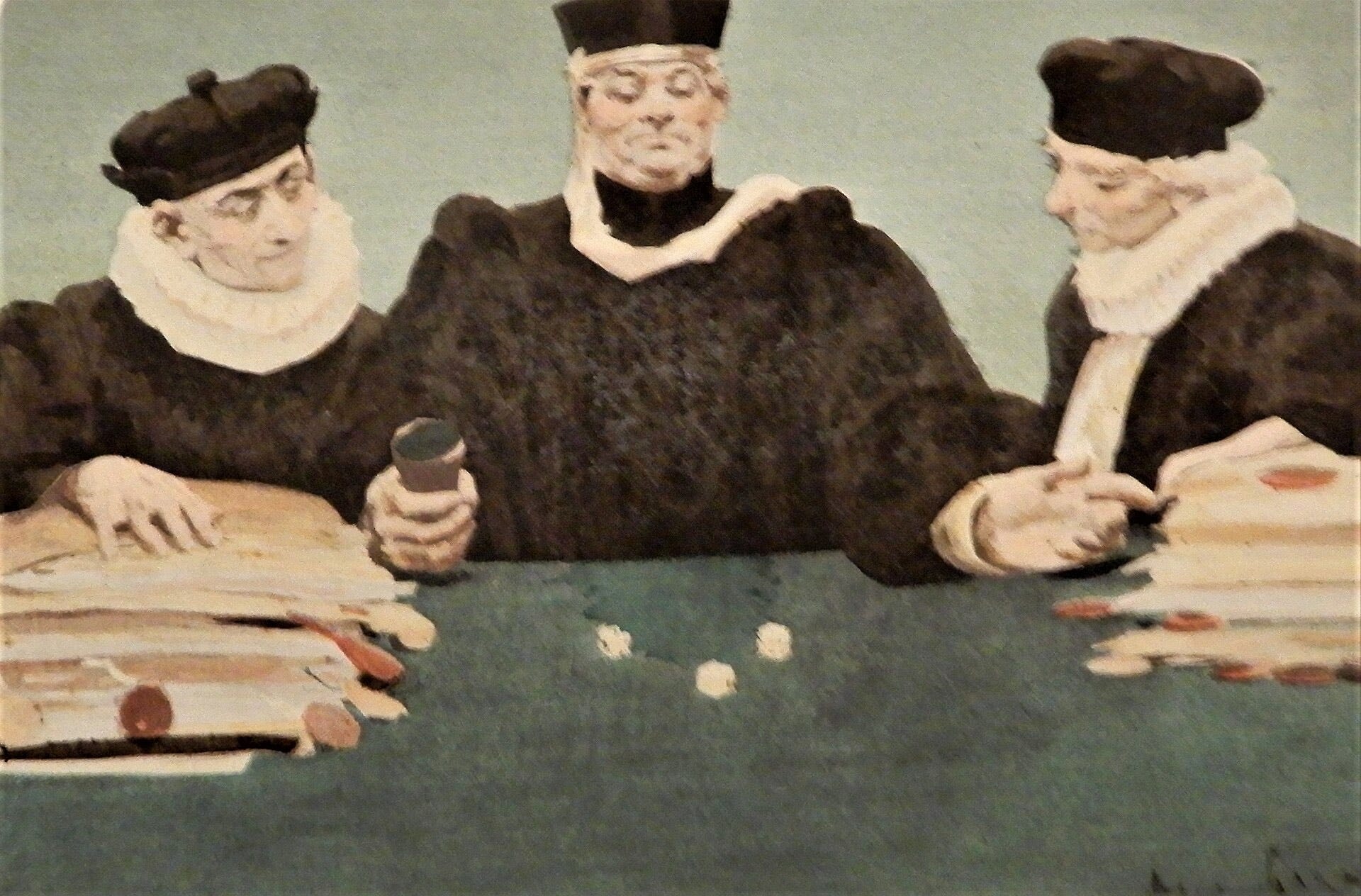

When Lee Kuan Yew set out to build modern Singapore, he didn’t start with tax incentives or infrastructure. He started with the legal system. No investor, business, or citizen trusts a state where enforcement depends on political patronage or executive whim. Legal certainty wasn’t a byproduct of stability for Singapore, it was the precondition for both.
Indonesia’s official creed of course is that we are a negara hukum, a rechtstaat, a constitutional state governed by law. The Febrie Adriansyah affair says otherwise. What Tempo’s Bocor Alus reporting describes isn’t a rechtstaat at all, but a machtstaat or power state operating in plain sight: legal status negotiated behind closed doors, law enforcement agencies acting as rival fiefdoms, and the president stepping in to insulate his own people from accountability.
Febrie, until recently head of the Attorney General’s Office (AGO) for extraordinary crimes (Jampidsus), came under police investigation for alleged bribery and money laundering connected to the Asabri and PLN coal procurement cases. Police seized 74 kilograms of gold and nearly half a trillion rupiah in cash. That should have been the start of a straightforward prosecution. Instead it set off a scramble to manage the politics before the law could catch up.
Tempo’s reporting lays out the mechanics: Defense Minister Sjafrie Sjamsoeddin and other insiders lobbying President Prabowo Subianto directly, trying to keep Polri from naming Febrie a suspect, or at least to move the case back under the Attorney General’s own roof where it could be handled more quietly. Tempo also reported that businessmen linked to the case were approached to claim the seized gold as their own, a way of pulling the evidence out of Febrie’s orbit without anyone having to explain where it actually came from.
And eerily, what actually drove the president’s involvement wasn’t a concern for the investigation’s integrity but desire to keep the story from becoming political noise, or kegaduhan.
The people behind criminalizations
We’ve written before about how prosecutorial power in Indonesia gets aimed selectively at business and public officials alike. This case shows where that architecture breaks down: the same agency wielding those tools against everyone else claims the same informal immunity the moment its own leadership is the target.
Part of what makes that double standard so galling is how aggressively the AGO, and more specifically the Jampidsus office has been willing to stretch the law when the target is someone else. Articles 2 and 3 of the corruption law were written around the idea of state loss, the kerugian negara. In recent years, prosecutors from the AGO office have leaned on a reading loose enough to bring charges without much more than a policy decision that went badly or a business call that, in hindsight, cost the state money. Actual enrichment, a bribe, a kickback, a diverted asset, has become almost optional. The mere existence of a loss, however indirect or contested the accounting, has been enough to build a case on.
That’s the same expansive reading that turned a business-judgment dispute into a headline corruption verdict, and it’s the same one that keeps company executives negotiating with the AGO rather than the courts, because the line between a bad deal and a crime has gotten so blurry that nobody wants to test it in front of a judge. When the standard for what counts as corruption is this elastic, the agency applying it holds enormous discretion over who gets charged and who doesn’t.
And this is where the Febrie case cuts deepest. If the unit running these prosecutions is itself compromised, the public has every reason to look back at Jampidsus’s own high-profile arrests. Was that businessman charged because the evidence held up, or because he didn’t funnel enough gold to Febrie’s acquaintances? An agency running enrichment cases on a loose reading of the law loses all credibility to do so the moment it turns out the people bringing those cases were taking gold themselves.
We need to clean house
Fixing this isn’t a matter of reshuffling personnel or issuing a statement. The most basic problem is structural: we can’t expect the AGO to police itself, and right now that’s effectively what’s happening whenever the target is one of its own. If Jampidsus is compromised, that should be a KPK case, not an internal AGO matter, the same way we wouldn’t ask a police precinct to investigate its own commander for taking bribes.
What this actually calls for is a president willing to clean house, starting with Jampidsus itself, and treat legal certainty as something worth more than avoiding a bad news cycle. Prabowo built his campaign on promises of law enforcement without fear or favor. This is the test of whether that meant anything, or whether “no fear or favor” stops the moment the favor in question is his own.
Prabowo has set his sights on 8 percent economic growth. That number doesn’t happen without investors trusting Indonesia’s legal system enough to bet on it for the long haul. Unless legal reform becomes something the president takes as seriously as the growth target itself, the only 8 percent he’s likely to hit is his approval rating.
Back to Mr. Lee, he decided that Singapore would keep the Judicial Committee of the Privy Council in London as its final court of appeal long after independence to give “foreign investors a guarantee of impartiality that local courts alone couldn’t offer yet”. We are not suggesting Indonesia outsource its law enforcement or judiciary like Mr. Lee did, but we do need to do something.
The elastic reading of kerugian negara and the informal immunity are the same instrument from two perspectives. A threshold vague enough to turn a bad commercial decision into a charge is what manufactures discretion, and discretion is the thing that has resale value. Which is why personnel changes tend not to hold: replacing the holder leaves the asset intact. Narrowing what counts as state loss removes the goods from the market. Singapore's certainty came from constraining discretion rather than from better officials.