

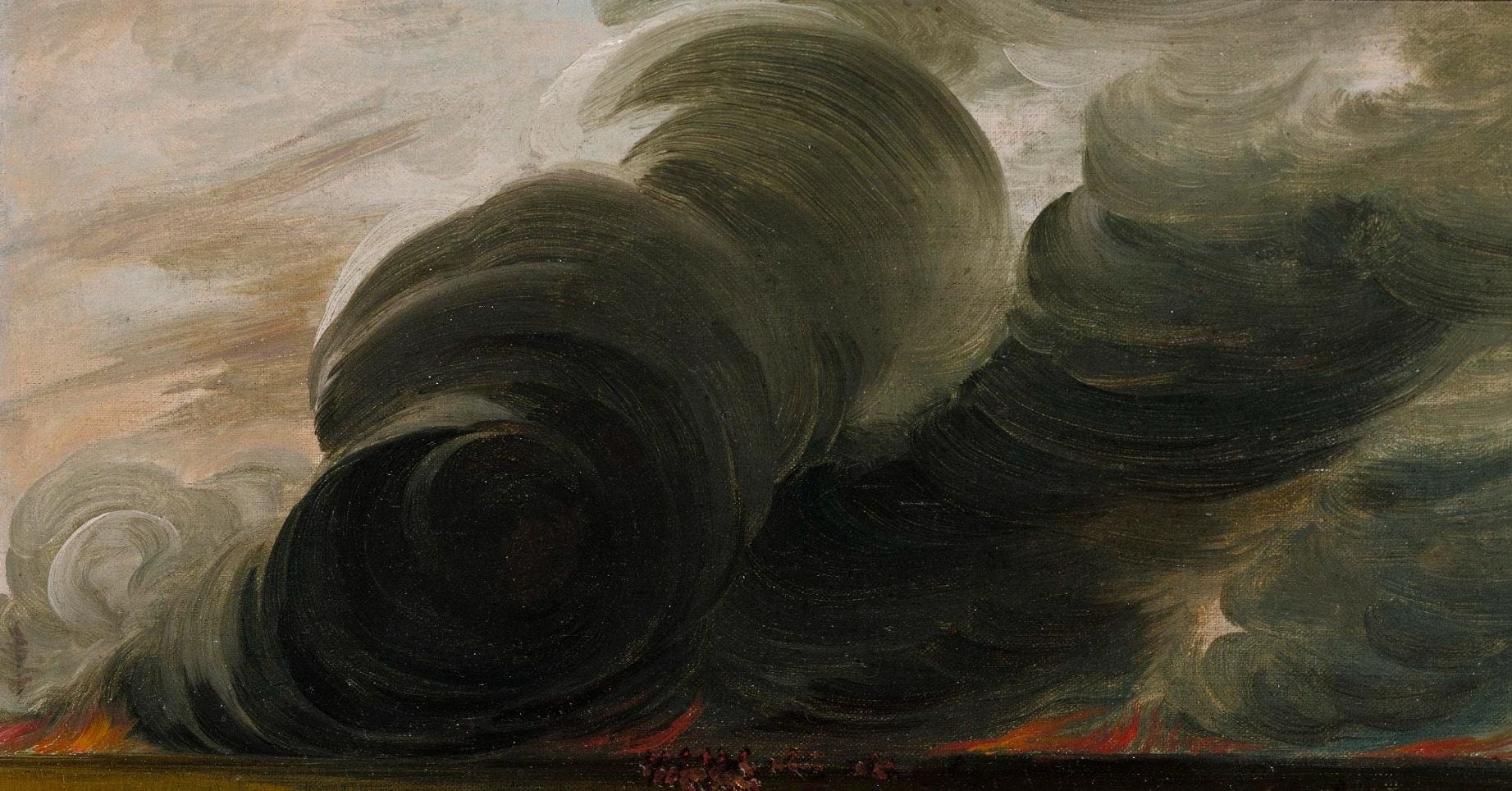
The sky appears crimson orange in dystopian-like viral videos as fires continue to rage across the forests and peatlands of Kalimantan, Sumatra, and Papua. People have been living under a suffocating blanket of haze there for over three months, many suffering from acute respiratory infections as the air gets increasingly hazardous.
President Prabowo Subianto recently said he is consulting experts on how to tackle the toxic haze, but it may be time to rely on rain as the “final solution.” But the long dry season is not to blame. Experts at the Meteorology, Climatology and Geophysics Agency (BMKG) had sounded the alarm about the severity of the Super El Niño, which would increase the risk of forest fires, since April 2026. Yet the government did little, if anything, to seriously prevent forest and peatland fires, a chronic ecological disaster we have repeatedly failed to manage.
The government’s response has a gap: putting out fires is critical, but it is not the same as managing a disaster at this scale. If they measure a response’s success primarily by the number of personnel deployed, or fires extinguished, they overlook the ordinary people who bear the costs. The government must respond to the crisis in its full scope, including immediate health impacts, economic losses, and longer-term environmental damage.
The question now is: can the government’s response protect people from the consequences of their negligence?
Firefighting alone is not enough
At the central level, the prevailing narrative is that the government has deployed maximum effort and resources to put out the fires. Cabinet Secretary Teddy Indra Wijaya claimed the government has deployed over 60,000 personnel to carry out a “land operation” with an 80 percent success rate in extinguishing new fires. This kind of success claim is paraded around as if the war against forest fires can be measured solely by the number of hectares extinguished.
However, the success of a disaster response cannot be measured solely by the number of fires extinguished. The government may claim to have reached maximum capacity, yet smog continues to blanket cities, poison citizens’ lungs, and disrupt everyday life.
The direct blow is now being borne brutally by the most vulnerable groups. Schools are forced to close in North Sumatera (and neighboring countries like Timor-Leste), robbing children of their fundamental right to a safe, proper education. As of 11 October, over 62,000 infants and toddlers are suffering from chronic coughs and acute respiratory infections, threatening their development. Daily-wage earners, farm laborers, and small vendors lose their livelihoods overnight because stepping outside into hazardous air is an impossible gamble. These are not peripheral consequences of the fires. They are central measures of the disaster’s severity and of the government’s responsibility to respond.
The government must therefore broaden its definition of progress. It must continue extinguishing active fires while protecting people from hazardous air, ensuring essential services continue, helping affected communities recover, and holding responsible parties accountable. These are not competing priorities but complementary responsibilities.
Indonesia already has legal frameworks that support demands for emergency assistance, recovery, and accountability from the government and other responsible actors. The homework now is to translate those frameworks into action while the crisis is still unfolding.
Drawing on an analogy of an airline’s responsibilities when disruption leaves passengers stranded, there are four things the government must do:
1. Provide immediate relief for people throughout the hazardous haze and fire, now
Public health protection must be an immediate part of the emergency response, not a secondary measure after the fires are extinguished.
When flights are canceled, passengers may be entitled to assistance with food, accommodation, and alternative arrangements, depending on the circumstances and applicable rules. In a forest-fire crisis, the state likewise has a responsibility to ensure people are not left to bear the immediate costs of a disaster they cannot control.
Law No. 24/2007 on Disaster Management and Government Regulation No. 22/2008 on Funding and Management of Disaster Relief provide a legal basis for meeting emergency basic needs, including under Article 17 of the latter regulation.
In practical terms, immediate relief requires the government to provide:
Emergency shelter and evacuation: Safe, smoke-free environments with proper air filtration systems for displaced or vulnerable residents.
Basic health interventions: Immediate distribution of standardized masks (such as N95 respirators), mobile health clinics, and free medical treatment for haze-related acute respiratory infections.
Essential supplies: Ensure access to clean drinking water, nutrition, and other essentials for communities stranded by severe smoke and poor visibility.
Livelihood support: Provide temporary assistance for daily-wage earners, outdoor workers, and others who lose income because hazardous air prevents them from working.
These measures must be guided by timely air-quality information and clear thresholds for action. Residents need to clearly understand the risk level in their area and what precautions to take, while schools, employers, and local authorities need clear guidance on when to suspend or modify activities.
Just as assistance to stranded passengers cannot wait until a flight resumes, emergency relief must reach affected communities while the crisis is unfolding.
2. Use every available resource to contain the fires
The government must be honest about its capacity to contain the fires and mobilize additional resources when needed, just as an airline must find alternatives when it cannot get passengers to their destinations as planned.
The Indonesian government has reported deploying over 60,000 personnel and achieving an 80 percent success rate in extinguishing new fires. While we can acknowledge these efforts, the government should be honest about the scale of the problem and whether its operational capacity matches the crisis’s scale and persistence.
This problem has now caught international attention, reflecting its true scale. Transboundary haze sparked serious debate in neighboring Malaysia’s parliament, with politicians like Syed Saddiq recorded on camera voicing Malaysians’ anguish over haze disrupting their daily lives, urging fellow ASEAN countries to apply diplomatic pressure and treat Indonesia as “an outcast in the region.”
National pride should not prevent the government from using available resources to protect people. Malaysia said it offered assistance, but Indonesia didn’t respond. Japan, meanwhile, deployed three Chinook helicopters to Kalimantan, dropping 220 tonnes of water around Ketapang and Pontianak before concluding its mission. Japan’s Defense Ministry said in a statement that the Indonesian government appreciated its contribution to curbing the fires and added that it could handle further response.
Unfortunately, this isn’t the first time the government has been reluctant to accept assistance from foreign states. During last year’s floods in Sumatra, the central government reportedly only allowed local authorities to receive aid from international entities while restricting assistance from foreign governments. Such distinctions deserve scrutiny when they risk narrowing the resources available to people in need.
Where domestic capacity falls short, the government should coordinate additional resources and accept appropriate assistance from other countries and regional partners. An airline unable to manage a disruption with its existing capacity would be expected to explore workable alternatives. A government responsible for protecting millions of people should be equally willing to use every effective option available.
3. Rebuild livelihoods and restore damaged ecosystems
When a flight is canceled, airlines must not only get passengers through the immediate disruption, but also help them reach their destination. Similarly, for communities affected by forest fires, recovery means restoring livelihoods, addressing losses, and repairing environmental damage.
At this scale, the impact of haze extends far beyond smoke exposure. Daily-wage earners, farm laborers, and small vendors can lose income as hazardous air disrupts work. Farmers suffer crop and land damage. Families bear additional healthcare costs and educational disruptions. These losses can persist long after the fires are extinguished.
The government should assess these losses early and translate them into concrete recovery plans. This includes restoring livelihoods and damaged ecosystems, and ensuring assistance reaches those who cannot afford to wait for conditions to return to normal.
Recovery must also address who ultimately pays. Where evidence establishes that companies are legally responsible for environmental damage, the government should pursue compensation and restoration through available legal mechanisms. Public funds may be needed to provide timely assistance, but the public should not automatically bear the long-term costs of damage caused by these actors.
Government Regulation No. 22/2008 on Funding and Management of Disaster Relief and Law No. 32/2009 on Environmental Protection and Management provide relevant frameworks for disaster recovery and environmental restoration. Yet, pursuing accountability in court can be difficult. Community lawsuits against concession corporations in Ogan Komering Ilir (South Sumatera), for example, faced setbacks over rigid legal standing requirements.
An airline would not fulfill its responsibility by simply providing a meal while leaving passengers stranded indefinitely. Likewise, the government cannot consider its job done once the smoke clears. Recovery must begin while the crisis is unfolding, with clear plans for livelihood support, environmental restoration, and compensation where legally warranted.
4. Address the causes and consequences of preventable harm
When an airline’s failure causes passengers harm, resolving the immediate disruption doesn’t erase its responsibility. Extreme weather can worsen fire conditions, but it doesn’t remove the government’s duty to prepare for foreseeable risks and enforce environmental laws. Government officials and companies must meet their legal obligations.
The government must establish who is responsible, whether agencies acted on available warnings, and what remedies are required. Law No. 32/2009 on Environmental Protection and Management provides avenues for environmental enforcement and legal remedies, subject to applicable requirements.
The government has begun investigating companies suspected of contributing to the fires. But without a transparent process to establish liability, impose appropriate consequences, and ensure restoration or compensation where warranted, these efforts risk becoming performative gestures rather than meaningful enforcement.
Indonesia has precedents for citizens seeking redress. After the 2015 fires and haze, residents of Central Kalimantan successfully sued the government, and the court granted 26 demands, including free healthcare for affected residents. Legal aid organizations (LBH) have led class actions in places like West Kalimantan, demanding that the government, among other things, take firm action against concession holders and restore burned forests and lands.
However, affected communities cannot be left to seek remedies on their own. This administration can take a bolder approach by fulfilling its enforcement responsibilities.
Passengers should not have to navigate a legal maze to obtain remedies for a service failure. Likewise, people affected by forest fires should not be left to bear the losses or fight alone to recover them.
The government must act now and prepare for what comes next
The ongoing crisis is an ecological emergency that tests the government’s ability to protect the public. The government should transparently assess whether the scale of the fires, public-health impacts, and disruption to essential services warrant a national disaster declaration. If the criteria are met, it should declare an emergency and mobilize the necessary resources. Whatever the formal status, immediate relief, recovery support, and effective fire containment cannot wait.
It is perhaps wishful thinking to expect the government to look beyond the immediate crisis and seriously examine why warnings did not translate into adequate prevention. BMKG had flagged heightened fire risks since April. At the very least, the public deserves to know how those warnings informed the government’s preparations, what went wrong, and what will change before the next fire season.
Rain may eventually bring relief. People may step in to help and donate. But neither can substitute for the government’s responsibility to protect its people.