

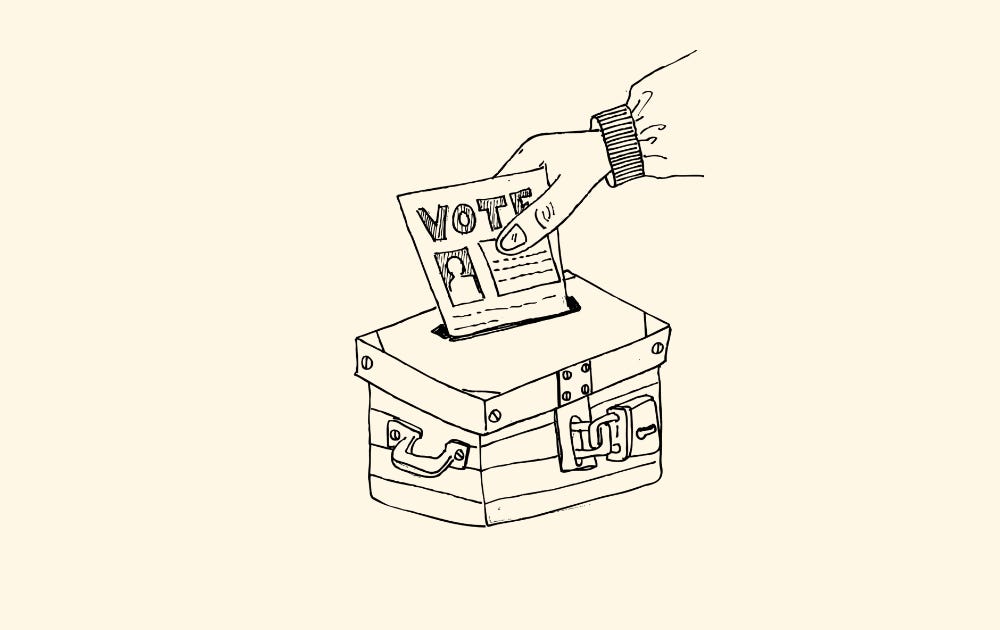
Two decades ago, Indonesia made a silent revolutionary pact with its citizens: The people were given the right to choose their own regional leaders, after decades of letting local legislators choose one for them inside a smoked-filled room. Direct election, a recognition that true legitimacy in a republic flows from the consent of the governed. A governor, or a mayor, anywhere in the country is accountable to the people they serve, not the party elites who appointed them.
However, a debate on whether to move back to an indirect election system has recently gained new momentum. Civil societies voiced their concerns, but we may breathe a temporary sigh of relief following the statement by Sufmi Dasco Ahmad, Deputy Speaker of the House of Representatives, who clarified that the House of Representatives won’t be discussing the regional elections in the coming broader revisions on election law. Still, this is no time for complacency.
History shows that these “test the water” tactics often precede a quieter, determined push for change. Just because the door is closed for 2026 does not mean it won’t be pried open next year; or in the lead-up to the next round of elections. We must remain wary of any attempt to trade public accountability for elite convenience.
Are we really debating if the post-1998 constitutional amendments were a mistake because it’s too costly?
The primary argument for this reversal is that direct elections are too expensive. Proponents point to the massive state budget required to organize votes and the “ballooning” costs for candidates, which allegedly fuels corruption.
But if we follow this logic to its natural conclusion, we find ourselves on a dangerous slippery slope. If the financial burden of democracy is too high for a regent, mayor, or governor, why isn’t it too high for the President? If we cannot “afford” to consult the people on their local leadership, do we also intend to dismantle direct Presidential elections?
To argue that direct local elections are a failure because they are expensive is to argue that the post-1998 constitutional amendments were a mistake. Democracy is indeed a “costly” public good, much like healthcare or education, but the price of a disenfranchised citizenry is far higher still.
Our argument is not that direct elections are without flaw, but that replacing them with selection by the elite few is a cure worse than the disease.
We believe that local elections should remain direct at the hands of the people, for two reasons:
1. Indirect elections remove any sense of transparency and accountability for local leaders.
Under a direct system, the line of sight is clear: the voter chooses the leader, and the leader is responsible to the voter.
If we move to an indirect system, that line is severed. When a leader is chosen by the DPRD, the public loses their “primary” power to punish failure. If the local parliament elects a candidate who is incompetent or corrupt, how do the people hold the legislators accountable?
In our current system, there is no effective mechanism for a citizen to “fire” a legislator specifically for their choice of a regional head. They may decide not to vote for the same party again in 5 years, but by then they might have forgotten completely. We are a notoriously forgiving society.
This creates a layer of political insulation where the wrong candidate can be installed behind closed doors, and the legislators responsible remain shielded from the consequences of that choice.
2. The desire to be re-elected provides the necessary push towards meaningful reform
We need only look at the history of Jakarta to see the virtues of the direct mandate. Across the political spectrum, we have seen successive Governors, who despite their vastly different ideologies, were driven by a common pressure: the need to deliver visible improvements to secure re-election.
From improving the public transport system to social safety nets to building public spaces for kids, these advancements happened because the leaders knew their survival depended on whether they delivered for their constituents. And Jakarta is hardly alone in this.
Bojonegoro recorded the highest rate in stunting reduction nationally in 2025 while preventing new cases. Surabaya topped the 2025 UI Green City Metrics having improved its waste management service while expanding green public spaces. Banyumas prevents 77% of its city waste from going to landfill and is recognized by neighboring ASEAN countries as a good example of how to manage waste sustainably.
The direct mandate forces a competition of ideas and results. In an indirect system, that competition is replaced by a competition of “lobbying” and “political dowries” (mahar), where the winner is the one who satisfies the party caucus, not the one who fixes the city’s problems. The few cases above illustrate how direct electoral pressure can align political survival with outcomes that benefit the public—even if imperfectly—versus an alternate reality where the benefit is squandered by the elite.
The current system needs improvements, but we don’t need to burn it down entirely just yet
We don’t deny that our current system is not ideal. The high cost of entry often bars the most competent candidates from running, and money politics remains a stubborn stain on our democracy. However, the solution is to refine the mechanics, not remove the voter.
Instead of dismantling the system, we should focus on:
Streamlining the electoral calendar to reduce the “fat” in administrative spending.
Capping spending and strictly enforcing transparency to lower the cost of candidacy.
Democratizing political parties by addressing the “mahar” system at its source by regulating how parties select their nominees internally.
The Association for Elections and Democracy (Perludem) wrote a comprehensive report on how this can be achieved, read here.
Democracy is expensive, but it’s still our best bet
Democracy, by way of direct voting, is often inconvenient and rarely “cheap” especially for Indonesia with its vast geographical spread. But direct voting is the ultimate check on power. Reverting to indirect elections is a vote of no confidence in the Indonesian electorate. It sends the message that we, the people, are incapable of choosing our own path—even if we will not always get it right.
The real question is not whether democracy is too expensive, but whether the costly price tag ensures or buys accountability.
We stand for a system that trusts the people’s judgment. Let us focus on making our elections cleaner and more efficient, but let us never make the mistake of making them a mere elite ordeal.