

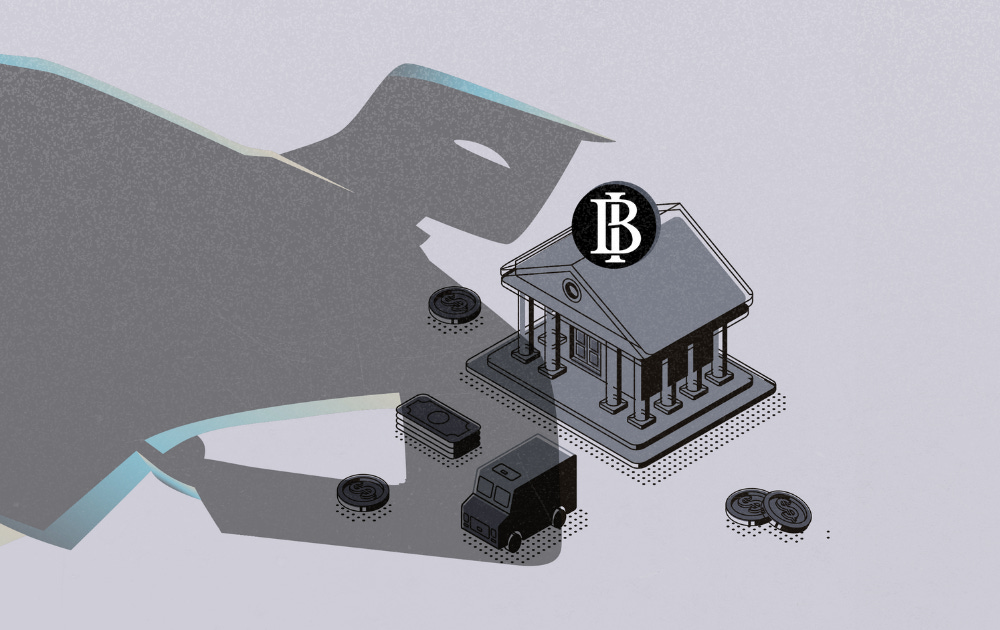
For nearly three decades, Bank Indonesia (BI) has served as the bedrock of the country’s macroeconomic stability. Since the traumatic 1997 Asian Financial Crisis, BI has evolved into a hallmark institution, earning its reputation through a disciplined, technocratic approach to monetary policy. Laser-focused on targeting inflation, the central bank has been keeping price increases predictable and exchange rate fluctuations manageable, even in the face of global shocks and periodic rupiah depreciations.
BI’s successes have been credited largely to its guaranteed independence as mandated by law. However, two troubling developments suggest the wall between the central bank and the executive branch is beginning to thin, risking the undoing of thirty years of institutional credibility for short-term political gains:
The appointment of the President’s nephew
The integrity of a central bank rests largely on the expertise and perceived autonomy of its leadership. The recent nomination of President Prabowo’s nephew, Thomas Djiwandono, to the Deputy Governor position is a troubling signal. Although he had emphasized his resignation as treasurer to Prabowo’s Gerindra Party in December, the familial ties to the Palace still raised concerns. More importantly, Thomas himself would be the first to tell you he lacks a reputable background in monetary policy (he had only been in government for about a year as Deputy Finance Minister).The drafting of the Financial Sector Development and Strengthening (P2SK) Bill
Currently put forward in the DPR, this bill seeks to expand BI’s mandate to include supporting economic growth. While dual mandates work for the U.S. Federal Reserve, Indonesia’s economic context is vastly different. BI’s single mandate of inflation control provides clear guidance on how to conduct prudent monetary policy in Indonesia. If inflation is high but unemployment is also rising, which path should BI choose? This dual mandate provides a legal backdoor for the government to pressure BI into keeping interest rates low to stimulate jobs, even if it triggers a currency crisis or a price spiral.
The fiscal backdrop makes these institutional shifts even more precarious. The administration’s massive projects, like the Rp 1 trillion a day Free Nutritious Meal (‘MBG’) program or the Red and White Village Cooperatives, are putting our national budget under unprecedented strains. There is a growing fear that BI will be called upon to revive the “burden-sharing” mechanisms as seen during the pandemic: purchasing government bonds to finance budget deficits. If this is done by printing new money, inflation risks will start to be concerning.
We must not take our current stability for granted. We do not want to replicate these cautionary tales:
Argentina: The government treated the Argentine central bank as an ATM for decades to fund populist spending and bridge fiscal deficits. It resulted in a devastating spiral, with inflation soaring to 211.4 percent in 2023. This directly led to the fall of the government in the 2023 election, which saw Libertarian Javier Milei take power.
Turkey: President Recep Tayyip Erdoğan infamously pressured the central bank to cut interest rates even as inflation was skyrocketing. This political interference saw inflation hit a staggering 85.5 percent in late 2022 and decimated the Lira, which collapsed from around 18 to the dollar in 2023 to over 32 by early 2024.
Zimbabwe: One cannot mention hyperinflation without mentioning Zimbabwe, which has trillion-dollar banknotes. This is largely attributed to its historically nonindependent monetary policy.
Inflation is a “hidden tax” that will hit the poorest Indonesians the hardest. To trade BI’s independence and risk instability for political convenience is a gamble we can’t afford to take.
We call on the government and the DPR to stay off of Bank Indonesia and let them operate their inflation-targeting mandate in peace.