

The author is a 2026–2027 Henry Luce Scholar based in Jakarta. She was previously the Asia and climate change writer for the Council on Foreign Relations in Washington, DC.
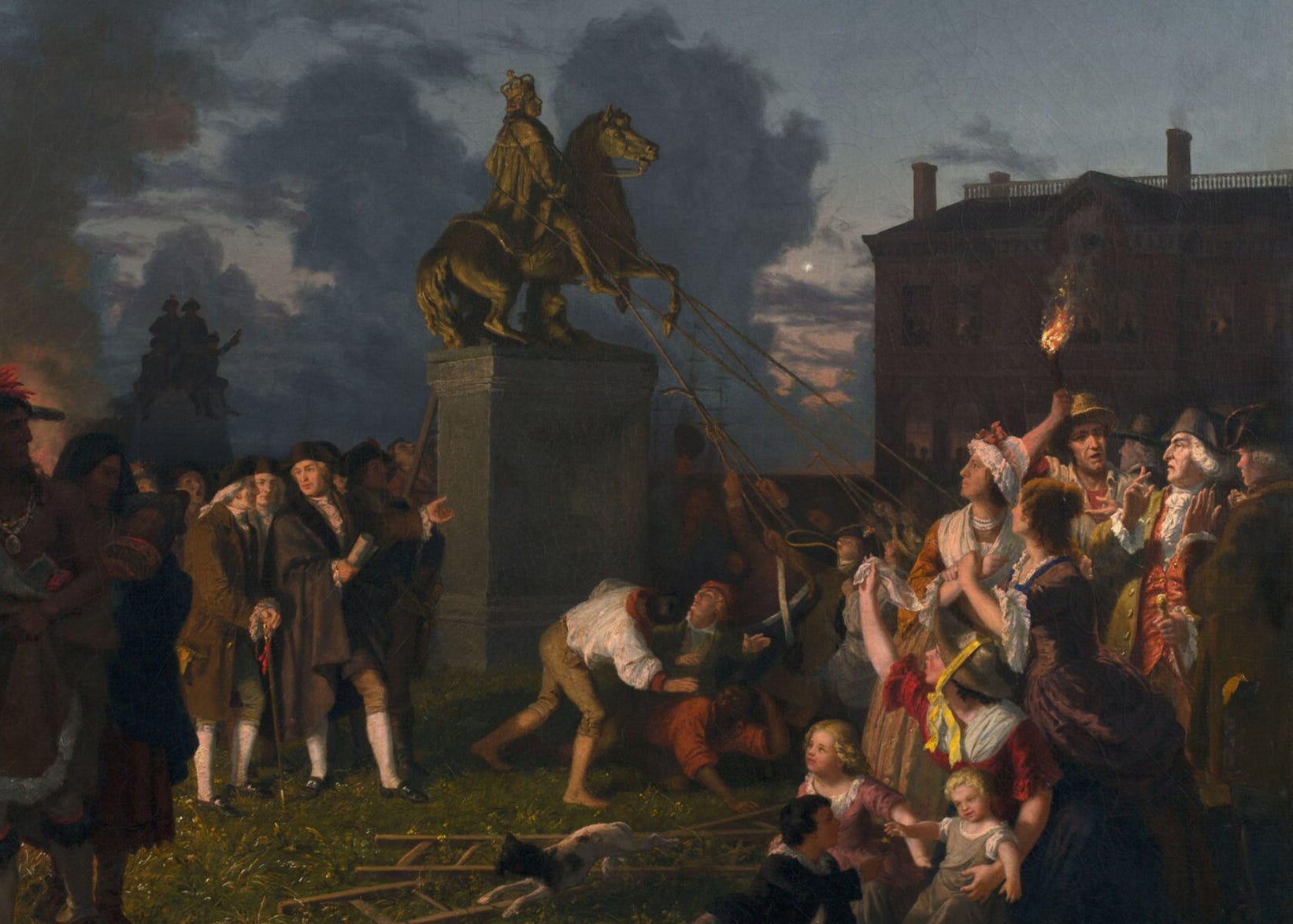

Almost a year ago, thousands of citizens poured onto the streets of major cities across this country in protest against an elite-driven government and executive power overreach.
Protesters demanded sweeping reform, sharing with news outlets their frustrations:
“I think there are brilliant minds who are here today who know what bad legislation, bad policies, can do to our entire country, and what the future looks like if we continue down, not able to stop what’s happening and proceeding.”
“We’ve been doing as much as we can anytime that we can because it has to continue. If we lose the momentum, then we lose the fight.”
“[I’m here] giving a voice to a voiceless man that has been taken from us — unfairly and unlawfully — and [his family] needs justice.”
If these sentiments sound familiar to Indonesian readers — with a vague allusion to the nationwide (even international) “#ResetIndonesia” protests in 2025 — then our readers might be surprised to learn that these are not quotes from Indonesian activists but American protesters during last October’s “No Kings” movement. The two protests, in fact, share some similarities: Both nationwide, decentralized, and triggered by economic woes and executive overreach from a president with autocratic tendencies. Despite the lack of international news coverage after the first protest in June 2025, No Kings continues to beat its own record as the largest single-day protest in U.S. history.
And there is another one to come. On 17 October, Americans will gear up for the fourth round of nationwide demonstrations, a month ahead of the Congressional midterm elections.
The coalition claims this protest will look different. It focuses on helping people vote early by organizing community events, block parties, and walking people to the polls. The gathering aims to “turn people power into voter power” amid the fight for the country’s democracy.
But No Kings is by no means the first of such movements against democratic backsliding, where the fundamental system of representation is under threat. In other recent protests around the world — from South Korea to Serbia — people have fought for the resilience of their democracies with power amassed through broad-based support, consistent civil disobedience, and sustained electoral pressure on governments and executive powers, resulting in major governance reform and political realignment.
With protest culture widespread but fragmented in Indonesia, a major underlying issue continues to be:
What next?
This article dives deeper into protest movement models, how other countries have turned people’s desire for change into sweeping legislative action or executive reform, and which case studies might apply in an Indonesian context. In other words, after the streets are flooded and momentum is high, how do citizens begin holding political actors accountable?
A new dual-purpose mission for protest movements
Last year saw a surge in protests worldwide, some of which were sustained from 2024, like those in Serbia, Kenya, and Bangladesh. Many of these mass demonstrations were spearheaded by a so-called Gen Z solidarity, protesting shared themes of corruption, economic stagnation, and frustration under the current political systems in their countries.
But more than a year later, protest outcomes have been mixed. Some countries, like Nepal, managed to completely overthrow their old-guard leadership, while others, such as Indonesia, faced harsh government crackdowns and mass detention of protesters that struck a blow to activists’ motivation, according to a source involved in the demonstrations.
This column will not belabor the debate over whether protest efforts are generally effective methods of demanding reform. Rich academic evidence already shows that protests can and do raise awareness of a social problem and empower communities on a scale large enough to pressure political leaders to enact specific policy reform.
The issue facing several countries today, whether Indonesia or the United States, is the global rise of democratic backsliding, and the limited power of protesting under these governments. Mass demonstrations have increasingly become more than a battle for specific policy reforms; they are also a fight to preserve the right to protest itself in the face of governments threatening to prune a major avenue for public expression.
“Although one-off mass demonstrations in eroding democracies can yield short-term, tactical concessions, especially when leaders are caught off-guard, it does not generally halt the “trajectory of autocratization,” said Saskia Brechenmacher, Senior Fellow for Democracy, Conflict, and Governance Program at the Carnegie Endowment of International Peace in an interview with The Reformist.
This is what happened in Georgia, an Eastern European nation. Since the ruling Georgian Dream party took control of parliament in 2012, the party has expanded its control over state institutions, security forces, and electoral governance. In 2023, the country introduced a so-called Russian-style foreign agent law, which would require NGOs receiving 20 percent or more of their funding from international sources to register themselves as “pursuing the interests of a foreign power.” Mass protests ensued, with activists and opposition leaders arguing the measure was introduced to silence dissent. The government initially withdrew the proposal to appease protesters, but in 2024, the legislation was ultimately passed into law.
Instead, Carnegie’s Brechenmacher told The Reformist that mass demonstrations have proven more effective in backsliding democracies when they mobilize people into political channels, whether by encouraging opposition legislators to rein in executive overreach or by building larger electoral coalitions to vote out the incumbent leader. South Korea is an example of the former, where mass protests against former President Yoon Seok Yeol’s failed attempt at martial law empowered opposition leaders in the parliament to act swiftly and impeach him in 2025. Analysts have considered the consistent and frequent punishment of authoritarian overreach as both a demonstration of its democratic resilience as well as its fragility.
What’s clear is that protests alone do not automatically remove bad leaders or policies. Parliaments, courts, and government institutions need to feel the political pressure to meet public demands because doing nothing to change the status quo threatens their power.
The case for building broad coalitions
No Kings is currently attempting reform through the latter, electoral strategy ahead of the midterms, after spending the past year building a large tent coalition. The prodemocracy movement has an intentionally broad and appealing message — “sustained national resistance to tyranny,” according to the coalition’s website — which takes a stance against a breadth of the Trump administration’s unpopular policy decisions and executive overreach, including:
the unlawful detention, violent arrests, military deployment into American cities, and even the murder of US citizens by the Immigration and Customs Enforcement (ICE);
election manipulation and political gerrymandering (reconfiguring voting maps to favor certain parties);
a strained economic environment that has hiked the cost of living across the country; and
foreign wars and intervention in countries such as Venezuela, Gaza, and Iran.
The movement has also sought to decentralize beyond major city centers and has brought out several first-time protesters across the country, increasing resistance in counties where Republicans have historically dominated. That said, polling data still reflects that more than 90 percent of protesters identify as left-leaning and voted Democrat in the 2024 election.
Bringing more people into the fold is not without its criticisms (and not only from MAGA sycophants). Other observers have argued that the anti-Trump movement falls short on actually offering specific policies, and protesters’ range of demands introduces internal contradictions within the movement, making it challenging for organizers to prioritize.
But the broad coalition increases the likelihood that No Kings reaches the critical 3.5 percent threshold of single-moment mass mobilization. According to research by Harvard Kennedy School political scientist Erica Chenoweth, “most governments fail to withstand a challenge against their rule [such as a change in leadership or government control] if more than 3.5 percent of their country’s population mobilized against it during a peak event.” For the United States, that would be 12 million people, and the last No Kings protests amassed 8–9 million people.
For Indonesia, that threshold is closer to 10 million people.
Of course, the sheer number of protesters alone is not enough. Chenoweth’s work also acknowledges that factors including momentum, organization, strategic leadership, and sustainability “are likely as important as large-scale participation in achieving movement success and are often precursors to achieving 3.5 percent participation,” and that there are movements that have not met this threshold but still exerted government pressure.
The critical conclusion: Large-scale, nonviolent movements require sustained momentum, often over years, to experiment with different political vehicles for mobilizing against backsliding. While it is still too early to tell what the effect this strategy will have on actually rallying voters for the U.S. midterms, the framework offers a window for observers to take note of the strategies and limits of this movement.
But what if you don’t trust your government?
Readers facing the everyday effects of democratic backsliding — the media censorship, intimidation, and in more severe cases, the use of militarized force and surveillance on civilians — might skim the first sections of this article and roll their eyes, exhausted by hearing a sentiment akin to former president Barack Obama’s remark during a 2016 presidential election rally: “Do not boo, vote!”
That’s to say, sure, voting your way out of an autocrat’s leadership sounds nice in theory. But what if you feel that there are no politicians or parties that can actually effect change? How can you build a coalition if there is no alternative future?
Other countries have offered another path to resistance, one that seems pretty popular among a younger generation of activists and civically engaged citizens: starting fresh. Overhaul the system entirely and rid the institutions of cronyism, nepotism, and old regimes that no longer serve the public. Nepal is perhaps the most recent and prominent example of this political restart, but neighboring Sri Lanka and Bangladesh have also elected new governments after a series of protests ousted their leaders in 2022 and 2023, respectively.
To the credit of these movements, the rupture of old regimes created a narrow opportunity to establish new systems, one that still took the form of elections rather than a complete militarized takeover. After the ousting of now-exiled prime minister Sheikh Hasina in 2025, Bangladesh’s interim government proposed a new national charter that calls for sweeping government reforms, such as proposing term limits on legislators and imposing measures to prevent conflicts of interest, money laundering, and corruption. The legal framework is in the process of being implemented following a referendum vote earlier in February.
Nepal’s newly formed youth-alliance party, Rastriya Swatantra Party (RSP), won a majority in the country’s March parliamentary elections — the first majority win in decades — making former-rapper-turned-Kathmandu-mayor Balendra “Balen” Shah the youngest prime minister in Nepal’s history. In his first few days, the government issued a 100-point roadmap to governance reform, ordered authorities to arrest the former prime minister KP Sharma Oli over his violent crackdown on the protests that ousted him from power, opened corruption investigations on three former prime ministers, and offered employment at the national electricity company to the families of those killed in the 2025 protests, among other legislation.
These moves were hailed as a significant step in rebuilding these countries from the ground up. But observers say several uphill battles remain beyond any single government’s control, including the inherited economy (all three countries are facing IMF bailouts), environmental disasters, and a high risk of political fracturing within parties. Massive flooding hit Nepal in late August, killing more than 1,400 people. While Prime Minister Shah called for reparations by industrialized powers at this year’s UN General Assembly, the country is still struggling to raise adequate funding for its recovery efforts amid a global shrinking in development aid.
Working with the system you’re given
Complete revolution is a high-risk game, with major uncertainties in both ensuring clean internal governance and tackling external geopolitical, environmental, and economic challenges that will undoubtedly continue to challenge a country regardless of who is in power. Ultimately, organizers of mass movements must ask themselves candidly: Is this risk worth taking? After a protest, what is going to be the strongest political vehicle to drive the necessary systemic reform they want to see?
Indonesian organizers are contending with this question in the aftermath of last year’s demonstrations, according to Satya Azyumar, an activist who co-founded Social Justice Indonesia, a youth organization that advocates for the rights of vulnerable and marginalized groups and trains and accompanies first-time protesters. “I’d say the characteristic of youth organizing in Indonesia is that they are arguably apolitical — they don’t trust practical politics. This is understandable, given the disappointment with political parties as democratic institutions in Indonesia aren’t functioning well,” he told The Reformist.
Disillusioned by the current system, Azyumar said many activists are inspired by Nepal and the decentralized, anti-autocratic protests in Hong Kong in 2019. “But at the same time, [Indonesian organizers] lack the capacity to bring out such massive change right now; it has to be built up gradually,” he added, while also recognizing that even after Nepal was able to topple its government, the new leadership was left scrambling to figure out what new form of government the country would take. For now, organizers in Jakarta are seeking to foster a fresh vision for “political resistance,” including by supporting alternative parties like the Labor Party (Partai Buruh).
For those curious whether this strategy is effective, it may be worth closely watching the outcomes of the upcoming Serbian elections at the end of October. Since November 2024, student activists have been organizing massive anti-government protests after a roof collapsed in a renovated train station, killing 16 people. The movement’s leaders assert that the poor infrastructure was a direct result of shoddy government development projects. Law enforcement was deployed to squash protesters, but the movement has only grown in solidarity to include teachers, lawyers and health workers. Residences across the country have provided students with shelter, food and legal aid.
Now, the protests have evolved from demanding more government transparency to what experts call “campaign mode.” Rather than seeking to run for office themselves, as was the case in Nepal, student organizers concluded that the appropriate political vehicle is to support their choice of technocratic policy experts for the election. Gathering more than 400,000 public signatures to field their own independent electoral list, the students are charting a path to challenge current populist President Aleksandar Vučić. Public polling predicts favorability toward Vučić, but analysts say that the election will likely be decided by citizens who have historically abstained from voting, which is where students have the best chance to mobilize.
Converting collective anger into durable political power
Protest movements have proven most effective when they are conducted persistently and elicit a critical mass invested in systemic reform. But it is only one component of political change. After the frustration and anger, underlying questions remain. Do we just organize another election with the same people but new party names and structures? Do we just celebrate a statement that the government will do better? Or do we just wait for the next wave of protests?
For Indonesia, this seems to be the question that everyone is asking and avoiding at the same time. Indonesia has romanticized its entire history as constructed through protest, from pre-independence, those in the 1960s that contributed to Sukarno’s resignation, the endless examples during Suharto’s New Order, the 1998 protests and the start of the Reformasi era, all the way to the new generation of young organizers in the past decade.
But systemic reform has been limited in recent years, with more authoritarian reactions to protests. “These young activists don’t really want to effect change through political channels. They take to the streets to demand change from the state but shy away from the ‘dirty’ or strategic advocacy work, such as lobbying,” Azyumar told The Reformist.
“Yet, we know that the current Indonesian government doesn’t feel the need to listen to the people. Why should we, as the public, make demands of people who don’t even care about us?” he opined.
In a moment where the right to expression and protest itself is under threat, it is more critical than ever to convert collective anger into durable political power. This includes mobilizing frustrated citizens into electoral politics and consistent disobedience to resist forces that seek to take this power away from the public. While the United States faces these challenges ahead of November’s midterm elections, Indonesian organizers still have several years to strategize which political vehicle will effect the necessary good governance the country deserves. Time will tell whether Indonesia can join the global wave of returning political power back to the people.